


In Lagos, ‘Hostile Gospel’ became more than a song. It became a journey between Brooklyn and Africa, between hip-hop and Afrobeat, and between generations of Black music that had been speaking to one another across the Atlantic long before any of us arrived with cameras.
Lagos does not quietly offer itself to a camera. It comes at you in layers: heat and traffic, music and movement, faith and commerce, wealth and economic inequality, humour and impatience, ambition and survival all occupying the same vast urban pulse. In 2008, when Talib Kweli came to Nigeria with MTV Africa to create the visual world around “Hostile Gospel Pt. 1 (Deliver Us)”, that restless energy became one of the most important characters in the film.
The idea was not to use Africa as decoration for an American hip-hop record. Lagos had to matter to the meaning of the song. Its streets and communities, the movement through the city, the people Talib encountered and ultimately the journey toward the New Afrika Shrine in Ikeja all gave the record a different emotional and historical dimension. What began with a song recorded in America gradually became a story about a much older relationship between Africa and its diaspora, and about music continuously travelling between the two. At the time, I was MTV Africa’s Head of Events, Marketing and Digital Media, and I oversaw the production, logistics, locations and filming in Lagos for Talib’s partnership with MTV Africa. Working in Lagos required a very particular balance.
We needed the discipline of a professional international production, artist movements, equipment, crews, locations, transport, permissions, timing and security all had to work, but if we controlled the environment so tightly that Lagos disappeared, we would have lost the very thing we had travelled there to capture.
The city had to remain alive around Talib. That made him an especially compelling artist for the project. Long before he physically arrived in Nigeria, Africa, history and the idea of a global African diaspora had already existed somewhere inside his artistic world. His music had always carried questions about identity, justice, politics, spirituality and community, and his own journey through hip-hop had developed at the intersection of scholarship and street culture. Lagos gave those ideas geography.
Talib Kweli Greene was born in Brooklyn, New York, on 3 October 1975, into a family deeply rooted in education. His mother, Brenda Greene, built a distinguished career in English and academia, while his father also worked within higher education. Books, language and debate therefore surrounded him from childhood, but Brooklyn provided another kind of education.
I will never forget all the deep late night conversations around that hotel pool in Lagos (in the pic with Suede as well), during those hot humid nights, after long hectic filming days on the streets of mainland and Victoria Island Lagos for the ‘Hostile Gospel’ music video and MTV docu
The borough was culturally explosive, constantly reinventing itself through music, fashion, language and street life, while carrying the social inequalities and racial complexities of New York with equal intensity.
Kweli came of age as hip-hop was completing one of the most extraordinary transformations in modern cultural history. What had begun in the Bronx as a local expression built around DJs, MCs, dancers and graffiti artists was rapidly becoming an international force.
By the late 1980s and early 1990s, hip-hop was no longer merely documenting the lives of young Black and Latino New Yorkers; it was reshaping global youth culture.
For Talib, however, its power was always about more than celebrity. Rap gave people the ability to narrate their own environments. It allowed communities routinely interpreted through politics, newspapers or sociology to speak for themselves, with all the humour, anger, contradictions and intelligence that conventional representations often stripped away.
He absorbed the competitive traditions of MC culture, but he was also drawn to the more experimental, Afrocentric and socially conscious currents of hip-hop.
Artists associated with the Native Tongues movement, including De La Soul and A Tribe Called Quest, had already demonstrated that thoughtful music did not have to sacrifice rhythm, originality or humour.
Rap could carry ideas without becoming academic, and consciousness did not need to exist separately from entertainment.
Talib studied experimental theatre at New York University, yet some of the most important parts of his creative education unfolded outside formal institutions: in bookstores and clubs, through poetry, records, politics and conversations with the emerging generation of artists around New York’s independent hip-hop scene.
One of the most revealing pieces of that early story involved Nkiru Books, the important Black bookstore in Brooklyn. Talib and Mos Def, later known as Yasiin Bey, helped support the institution at a time when they themselves were still building careers.
It illustrated something central to the cultural environment from which they emerged. Books, African history, political thought, neighbourhood life and hip-hop did not occupy separate worlds. They belonged to the same conversation.
Talib’s story began with more than beats and rhymes. Brooklyn, books, Black history and community all entered the music, giving him a voice that could challenge the world around him without ever losing the instinct of an MC.
Out of Talib’s friendship and creative relationship with Mos Def came Black Star, and with it one of the defining albums of late-1990s hip-hop. Mos Def & Talib Kweli Are Black Star, released through Rawkus Records in 1998, arrived at a moment when rap was becoming enormous commercial business, but a parallel independent movement was insisting that success could still be measured through ideas, originality and cultural influence.
Black Star became emblematic of that moment. Mos Def and Talib were both exceptional lyricists, but the chemistry came from their differences as much as their similarities. Their music could move effortlessly from competition and humour to political observation, philosophy and storytelling. Tracks such as “Definition” and “Respiration” placed them firmly among the most respected MCs of their generation.
Even the name carried a deeper historical resonance. Black Star invoked the Pan-African symbolism associated with Marcus Garvey and the Black Star Line, part of Garvey’s larger vision of Black economic independence, political consciousness and reconnection with Africa. The choice placed the group inside a history that predated hip-hop by decades.
For two young Brooklyn artists to carry that symbolism into contemporary American music was significant in itself. For Talib to later stand in Lagos, inside a cultural institution shaped by Fela Kuti, gave those ideas a physical dimension that none of us could have manufactured.
Black Star introduced Talib Kweli to a much wider audience, but his development continued through another essential partnership, this time with Cincinnati producer Hi-Tek.
Together they became Reflection Eternal, bringing Talib’s dense, highly articulate writing together with Hi-Tek’s soulful and often atmospheric production.
Their album Train of Thought, released in 2000, reinforced Kweli’s position as one of hip-hop’s most formidable writers. The music allowed him to move between social commentary, personal observation and pure MC technique without separating one from the other. Black Star had established the partnership between two great lyricists; Reflection Eternal showed how powerfully Talib’s individual voice could carry an album.
The next step was inevitably a solo one.
With Quality in 2002, Kweli broadened his sound and entered new creative relationships with producers including J Dilla, DJ Quik and a young Chicago producer named Kanye West. Kanye had not yet become the global figure he would later be, but the musical instincts were already there, particularly the ability to transform soul and gospel influences into powerful contemporary hip-hop.
Their collaboration on “Get By” became one of the defining songs of Talib’s career. The record spoke about ordinary people trying to survive inside systems that often seemed indifferent to them, working, struggling, compromising and still trying to preserve hope. Kanye’s gospel-influenced production elevated those observations into something communal and almost spiritual, giving Talib one of his most accessible records without asking him to dilute what he wanted to say.
That relationship between hardship and uplift would return several years later in an even more dramatic form.
From Black Star to ‘Get By’, Talib kept finding music inside contradiction, survival beside hope, intellect beside instinct, resistance beside the simple human determination to keep moving forward.
Kweli followed Quality with The Beautiful Struggle in 2004, a title that almost perfectly captured the tension within his career. He had become internationally recognised without abandoning the independent-minded sensibility that had shaped his earliest work. He could move between mainstream artists and underground spaces, between large international stages and politically engaged conversations, without allowing any one audience to determine what his voice should become.
He was frequently described as a “conscious rapper,” but the description could be both complimentary and restrictive. Consciousness was not really a genre. Every rapper communicated values, priorities and a worldview, whether those ideas were explicitly political or not.
Talib’s difference was that he tended to interrogate the world around him openly, and he had the lyrical ability to turn those questions into records rather than essays.
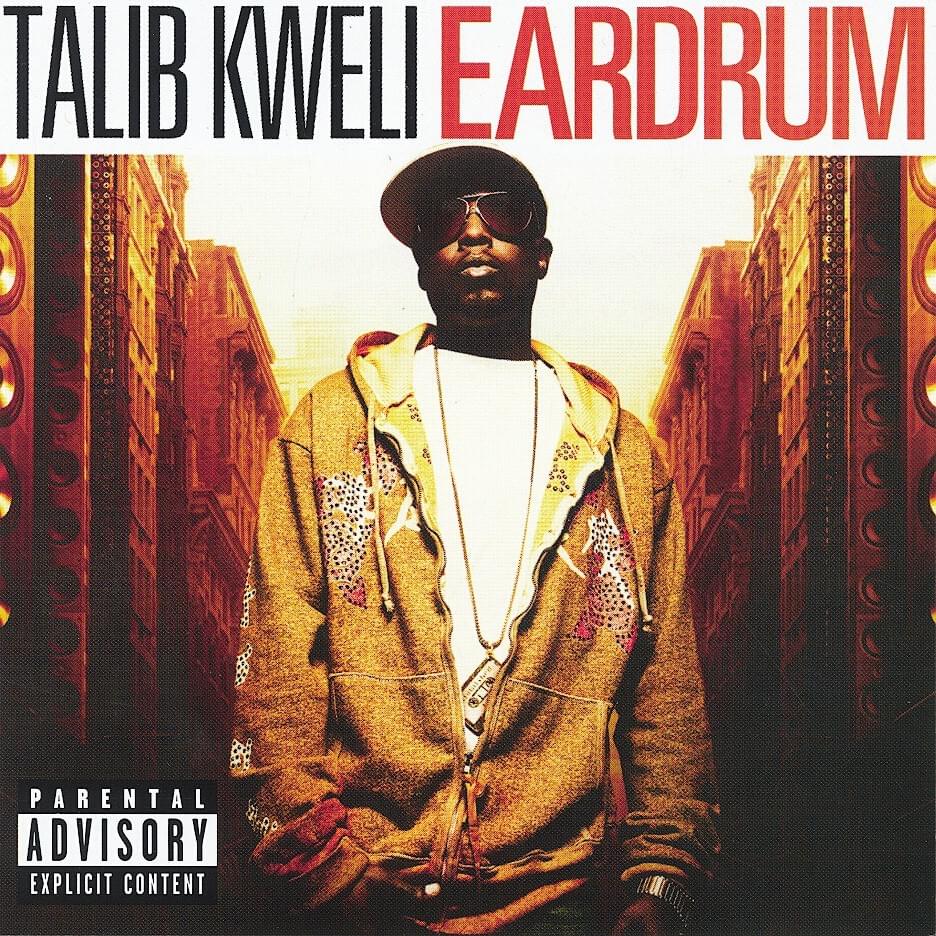
By 2007, that journey had led to Eardrum, one of the most important commercial releases of his career. The album reached No. 2 on the Billboard 200 and brought together an extraordinary range of producers and collaborators, including Kanye West, Pete Rock, will.i.am and Just Blaze.
Among its most powerful moments was “Hostile Gospel Pt. 1 (Deliver Us).”
Just Blaze understood scale. His production had helped define an era of American hip-hop in which soulful samples, enormous drums and cinematic arrangements could transform a track into something almost architectural. “Hostile Gospel” carried that sense of scale while drawing heavily on the emotional language of gospel. Additional voices, including the Brooklyn Youth Chorus Academy and MeLa Machinko, expanded the record beyond a solitary MC performance and gave it the feeling of collective testimony.
The title itself contained a contradiction powerful enough to carry the song. Gospel evokes faith, salvation and deliverance; hostility describes the conditions that make deliverance necessary. Talib was writing from inside that tension, looking at inequality, exploitation, political failure and human vulnerability without surrendering the idea that dignity and hope could survive within them.
The song was therefore already searching for a landscape larger than itself.
Lagos became that landscape.
'Hostile Gospel' carried the language of salvation into a world filled with pressure and contradiction. Lagos gave those ideas a physical landscape, intense, spiritual, difficult, beautiful and defiantly alive.
By early 2008, Talib was in Nigeria and we began moving the production into Lagos itself. From a production perspective, the city demanded constant awareness and flexibility. It could change around you quickly. Traffic could reshape an entire schedule; a location could transform as crowds gathered; movements that seemed straightforward on paper became something entirely different once the scale of Lagos entered the equation.
Rather than fighting that reality, we used it.
Talib travelled through the streets and communities of Lagos, at times moving by okada, the motorcycles that is such a familiar part of the city’s everyday transport culture. Instead of isolating him on closed sets, the camera moved into the rhythm of the city. Pedestrians, children, workers, vehicles, buildings, religious expression and ordinary street life became part of the videos texture. There was an important creative distinction in how we approached those images.
Lagos was not presented as a spectacle of hardship for an international audience, nor was it dressed up into a sanitised fantasy of urban Africa. Both approaches would have flattened the city into something far less interesting than the truth.
Lagos contained difficulty and beauty at the same time. It contained enormous wealth and economic inequality, profound faith and frustration, sophisticated global culture and deeply local traditions.
Millions of people were building lives within one of the most dynamic urban economies on the continent. Talib entered that environment as a participant in the journey rather than a distant narrator of it. Talib came from an African-American cultural tradition deeply shaped by the long history of the diaspora. Lagos possessed histories, music and political traditions of its own. The video became most interesting at the point where those histories began recognising one another.
Our task in Lagos was to create enough structure for the production to work, but enough freedom for reality to enter the frame. For Talibs creative vision of his story to come alive. The city’s unpredictability became part of its cinematic power.
The choice of Andrew Dosunmu as director became crucial to that process. Born and raised in Nigeria before building an international career across photography, fashion, music videos and cinema, Andrew understood Lagos from within. He did not approach the city as a collection of exotic images waiting to be discovered by a visiting camera.
He knew its visual rhythms. That perspective changed the film.
Andrew had already built an impressive body of work involving artists such as Common, Wyclef Jean, Tracy Chapman, Kelis and Maxwell, while his documentary Hot Irons had received significant recognition at FESPACO, one of Africa’s most important film festivals.
In the years that followed, he would develop an acclaimed feature-film career through works including Restless City, Mother of George, Where Is Kyra? and Beauty.
His films repeatedly explored identity, migration, intimacy and the experience of people moving between cultures, making the encounter between Talib and Lagos an especially natural fit for his visual sensibility.
For me, one of the most interesting aspects of the production was the layering of perspectives. Talib brought the experience of Brooklyn and African-American hip-hop into Nigeria. Andrew brought the eye of a Nigerian filmmaker whose career had become international. MTV Africa built the production framework around them within Lagos.
The result was not one culture observing another from a safe distance. It was an exchange.
Brooklyn and Lagos were looking at one another through the same camera. That exchange became increasingly meaningful as the journey through the city moved toward Ikeja and the New Afrika Shrine.
The Shrine carried a history much larger than any individual music video. Its identity was inseparable from Fela Anikulapo-Kuti, whose development of Afrobeat changed African music and eventually influenced artists across the world. Drawing together West African musical traditions, jazz, funk, percussion, horns and extended arrangements, Fela created a sound that could command a dance floor while carrying some of the most confrontational political writing in popular music.
His music challenged corruption, dictatorship, colonial influence and the failures of Nigeria’s political establishment. The original Afrika Shrine evolved into something far greater than a nightlife venue. It became a cultural and political space where music, community and dissent occupied the same room.
Fela paid heavily for that defiance. Arrests, harassment and state violence became recurring parts of his life, culminating in some of the most notorious confrontations between an African artist and political authority. Yet attempts to silence him only deepened the significance of what he represented.
When Fela died in 1997, the cultural movement surrounding him did not end. His family carried the music and its spirit forward, and the New Afrika Shrine, opened in 2000, became a living continuation of that legacy rather than a monument frozen in the past.
For Hostile Gospel, reaching the Shrine gave the video its natural destination.
The New Afrika Shrine changed the meaning of the journey. Suddenly Talib’s hip-hop stood inside the living legacy of Fela Kuti, where African music, politics and resistance had been inseparable for generations.
At the centre of that contemporary legacy stood Femi Kuti.
Femi had grown up within the extraordinary musical and political world created by his father. He performed with Fela’s Egypt 80 before establishing his own band, Positive Force, and developing an international career that extended Afrobeat into another generation. He inherited an extraordinary musical language, but he did not simply preserve it. He built his own voice within it. That made his appearance in the project particularly meaningful.
Femi Kuti's presence connected Talib directly with one of Africa’s most important modern musical lineages. The encounter created a bridge between Afrobeat and hip-hop, forms that sounded very different on the surface but shared some striking cultural instincts.
Afrobeat was built through large ensembles, complex percussion, horns, guitars and extended arrangements, while hip-hop emerged from turntables, breakbeats, sampling, drum machines and the voice of the MC. Yet both understood the political possibilities of rhythm. Both came from Black communities creating their own language when mainstream institutions often failed to represent their realities.
Both could make people dance while simultaneously confronting them with uncomfortable truths.
Standing at the Shrine, those connections felt less like a theory of musical history and more like something living. The relationship stretched much further back than Fela or hip-hop. African musical traditions were carried across the Atlantic by people forcibly displaced through the transatlantic slave trade.
Across generations those traditions helped shape spirituals, gospel, blues, jazz, soul and funk, while parallel histories developed throughout the Caribbean. Hip-hop eventually emerged from that immense diasporic cultural ecosystem.
Then the sounds moved back again.
American jazz, soul, funk and hip-hop travelled throughout Africa, where artists absorbed and transformed them alongside indigenous musical traditions. African music simultaneously continued influencing artists internationally. The exchange became circular rather than linear. By the time Talib Kweli stood with Femi Kuti in Lagos, music had been crossing and recrossing that ocean for generations.
The moment, of meeting Femi Kuti in Fela's New Afrika Shrine, in the private family rooms behind the stage, before filming started, was quite a moment in time for me, one that will stay with me forever.
Hip-hop did not have to discover Africa in Lagos. The deeper connection was already there, in rhythm, memory, history and generations of Black music moving continuously between the continent and its diaspora.
That larger cultural exchange was also central to what we were building at MTV Africa during those years. African audiences had consumed American and European popular culture for decades. International artists were familiar faces across television screens throughout the continent, while African artists had far fewer opportunities to reach international audiences on equivalent terms.
The ambition was to help change that relationship.
Our ambition was to create more space for African artists, filmmakers and cities to define the international entertainment conversation on their own terms.
Hostile Gospel became a particularly elegant expression of that thinking because nothing about the production required us to artificially manufacture the connection. Talib physically came to Lagos. Andrew Dosunmu brought the perspective of a Nigerian filmmaker. Our MTV Africa production team created and managed the framework on the ground. Lagos supplied the visual environment, its streets and people shaping the movement of the film until the journey reached one of the most historically meaningful music locations on the continent.
The city effectively became the production design.
That was far more powerful than constructing an imitation of Lagos somewhere else. A soundstage could reproduce buildings or lighting, but it could never reproduce the particular tension and movement of the city itself. It could not manufacture the interaction between Talib and people encountered along the way or the sense that the artist was genuinely moving through an environment operating independently of the production. Those qualities had to be lived, and shared with the global audience.
Talib’s own career made the arrival in Lagos feel like another chapter in a much longer trajectory. He had been born in Brooklyn in 1975 and entered professional hip-hop during the 1990s.
Black Star arrived in 1998, carrying Pan-African symbolism directly in its identity. Reflection Eternal followed with Train of Thought in 2000, before Quality and “Get By” expanded his solo career in 2002.
The Beautiful Struggle arrived in 2004, and Eardrum followed in August 2007, carrying “Hostile Gospel Pt. 1 (Deliver Us)” into the world.
In 2008, the journey crossed physically into Nigeria.
The African production was centred on Lagos, with the city’s streets, neighbourhoods and everyday environments providing the core visual landscape before the narrative reached Ikeja and the New Afrika Shrine.
Behind-the-scenes material from the production began circulating by February 2008, and the completed visual reached wider international audiences during March 2008. What gave the production its power was the meeting between the song and the city.
“Hostile Gospel” explored the struggle to retain dignity and faith within environments shaped by pressure, inequality and uncertainty. Lagos brought its own enormous human experience to those themes without needing to perform them for us.
The city contained aspiration and hardship, history and modernity, spirituality and commerce all at once. Andrew’s camera allowed those elements to coexist rather than reducing them into a single image of Africa.
Talib moved through that complexity instead of being positioned above it. By the time the film reached the Shrine, the contemporary city had begun merging with the historical memory of African resistance music.
Femi carried his father’s legacy into the present, while Talib brought with him decades of African-American musical and intellectual history.
The Atlantic suddenly seemed much smaller.
Lagos provided the setting for ‘Hostile Gospel’; but more significantly it expanded the meaning of the record, carrying Talib from the urgency of the contemporary city into the deeper musical memory of Fela, Femi and the African diaspora.
For me, that is the part of the production that still resonates most strongly. What we created in Lagos was not about one culture arriving to authenticate itself through another. The value came from allowing several histories to meet without forcing them into a simplistic conclusion.
Talib brought Brooklyn, Black Star, Reflection Eternal, Quality, The Beautiful Struggle and Eardrum with him. Andrew brought Lagos itself, the instincts of a filmmaker who understood the city rather than merely photographing it.
Femi and the New Afrika Shrine carried forward one of the most important musical and political legacies in modern African culture. Around all of those elements, our responsibility at MTV Africa was to build the production architecture that enabled the encounter to happen.
There is a tendency in large productions to believe that control automatically creates quality. Sometimes it does. But Lagos taught a different lesson.
The production needed organisation and discipline, yet its strongest moments came from leaving enough space for the city to contribute something we could not have storyboarded.
That balance became the creative heart of the film.
The streets brought movement and humanity. Andrew brought the eye. Femi and the Shrine connected the contemporary story to Fela and Afrobeat.
Talib brought the words and a personal artistic journey that had already travelled through decades of Black history before reaching Nigeria. Our production brought those threads together.
For a few remarkable minutes, Brooklyn and Lagos stopped feeling like distant points on opposite sides of the Atlantic. They became two chapters in the same continuing story of Africa, its diaspora and the music constantly travelling between them.
That remains the enduring meaning of Talib Kweli’s “Hostile Gospel” in Lagos for me. Hip-hop arrived in Nigeria carrying generations of African-American experience within it, and in Lagos it encountered histories that reached even further back.
At the New Afrika Shrine, the journey connected with Fela Kuti’s revolution in African music and with Femi Kuti’s continuation of that legacy. What appeared on the surface to be the making of a music video became something much broader: a conversation between places, histories and musical traditions separated geographically but connected culturally. The journey did not really begin in 2008, nor with Eardrum, Black Star or even the birth of hip-hop. Its roots reached into a far longer movement of African rhythm, memory and culture across generations and borders. What happened in Lagos allowed us to capture one extraordinary moment in that continuing exchange. Talib had come from Brooklyn.
Femi stood inside the musical inheritance of Lagos. Andrew’s camera moved between them. The city surrounded us with its intensity and life, and MTV Africa created the production framework that allowed the story to unfold.
Somewhere along that journey, from the streets of Lagos to the New Afrika Shrine, from hip-hop to Afrobeat, from Brooklyn back toward Africa, the distance between those worlds seemed to disappear.
They were not separate musical histories after all, but different movements within the same extraordinary story.
TALIB KWELI
HOSTILE GOSPEL
Brooklyn to Lagos: Hip-Hop, Africa and the Journey Home
My MTV Story Written and Recollected by
Jandré Louw
Documented recollections and experiences as a member of the founding MTV team in Africa and as MTV Head of Events, Marketing and Digital Media at the time, Producer and Creative Director during the formative launch years of MTV base in Africa.
Jandré Louw
MTV Africa Production Lead
Production Oversight
Lagos Production
Production Logistics
Location Management & Coordination
Filming Coordination
Artist Production Coordination
On-the-Ground Production Management
MTV Africa Partnership Production
Based on the Lagos Production of
Talib Kweli — Hostile Gospel Pt. 1 (Deliver Us)
Lagos, Nigeria — 2008
Starring Artist
Talib Kweli
Music Video Director
Andrew Dosunmu
Featuring
Femi Kuti
Original Track
Talib Kweli — Hostile Gospel Pt. 1 (Deliver Us)
Original Track Producer
Just Blaze
From the Album
Eardrum — 2007
MTV NETWORKS AFRICA
Alex Okosi
General Manager, Vice President
MTV Networks Africa
Dudu Qubu
Head of Production, MTV Networks Africa
Suede (Dominique Pearson @iamsuede )
Tim Horwood
Producers, MTV Networks Africa
ANDREW DOSUNMU
Director
Creative & Visual Direction
Music Video Direction
Lagos Visual Storytelling
FEMI KUTI
Featured Artist
New Afrika Shrine Sequence
Afrobeat Cultural Collaboration
JUST BLAZE
Original Track Producer
Hostile Gospel Pt. 1 (Deliver Us)
PRODUCTION
MTV Africa
African Production & Media Partner
Lagos Production Coordination
Campaign & Broadcast Platform
Production Location
Lagos, Nigeria
Principal Filming Environments
Lagos Streets & Communities
Ikeja, Lagos
New Afrika Shrine
Production Year
2008
Music Video
Hostile Gospel Pt. 1 (Deliver Us)
Photography Note: All photographs reproduced in this publication originate from original images taken at the time of the events depicted. Some source files are small or of very limited or low resolution because they were captured many years ago using early-generation Nokia, Motorola and BlackBerry mobile handsets, whose cameras had significantly lower image-quality and resolution capabilities than those available today. Where necessary, selected photographs have been enlarged, upscaled, depixelated and resolution-enhanced to improve clarity and presentation. AI-assisted tools were used solely for these technical restoration and display purposes. No people, objects, settings or material visual content were added, removed or generatively altered; the photographs remain faithful to the original moments as they were captured as the actual photographs.