


By the time Air Force 1 turned twenty-five, it was no longer simply a Nike basketball shoe. It had become a global cultural language, travelling from American courts and hip-hop streets to Lagos, Johannesburg, Cape Town and a new African generation making that language their own.
There are products that become successful, products that become famous, and then there are those rare objects that somehow escape the boundaries of the company that created them and become part of culture itself. By the time the Nike Air Force 1 celebrated its twenty-fifth birthday in 2007, it had unquestionably become one of those objects.
It had begun life as a basketball shoe in America, engineered for performance and built around Nike's still relatively new Air technology. Yet twenty-five years later, its meaning had expanded almost beyond recognition. The Air Force 1 belonged to basketball, but it also belonged to hip-hop. It belonged to DJs, rappers, dancers, designers, graffiti artists, sneaker collectors and fashion. It belonged to Harlem and Baltimore, but increasingly it belonged just as naturally to Johannesburg, Lagos, Accra, Cape Town and the young urban cultures emerging across Africa.
On Thursday, 12 July 2007, that remarkable twenty-five-year journey arrived in the heart of Johannesburg when Nike and MTV came together to stage and host the South African Nike Air Force 1 25th Birthday celebration.
Behind that partnership was a shared belief that this could not simply be another branded event. It needed to recognise what Air Force 1 represented culturally and reinterpret that history through the energy of contemporary Africa.
On the Nike side, Ade Kemi Benjamin and Greg Lewthwaite, part of Nike's senior management leadership in Africa at the time, became essential figures in turning that ambition into reality. As Directors of the campaign, they helped drive the Nike vision for the project and were fundamental to the partnership with MTV, supporting an approach that understood the anniversary as a cultural moment rather than simply a footwear promotion. Their leadership gave the campaign the space to become bigger, more immersive and more relevant to the African audience it was speaking to.
The location was on Commissioner Street in Johannesburg's CBD, surrounded by the architecture, grit and restless energy of a city that was rapidly becoming one of Africa's most important centres of music, television, design, nightlife and youth culture. It was difficult to imagine a more appropriate setting for a shoe whose history had itself been defined by leaving behind the environment for which it was originally created and being reinvented by the people who adopted it.
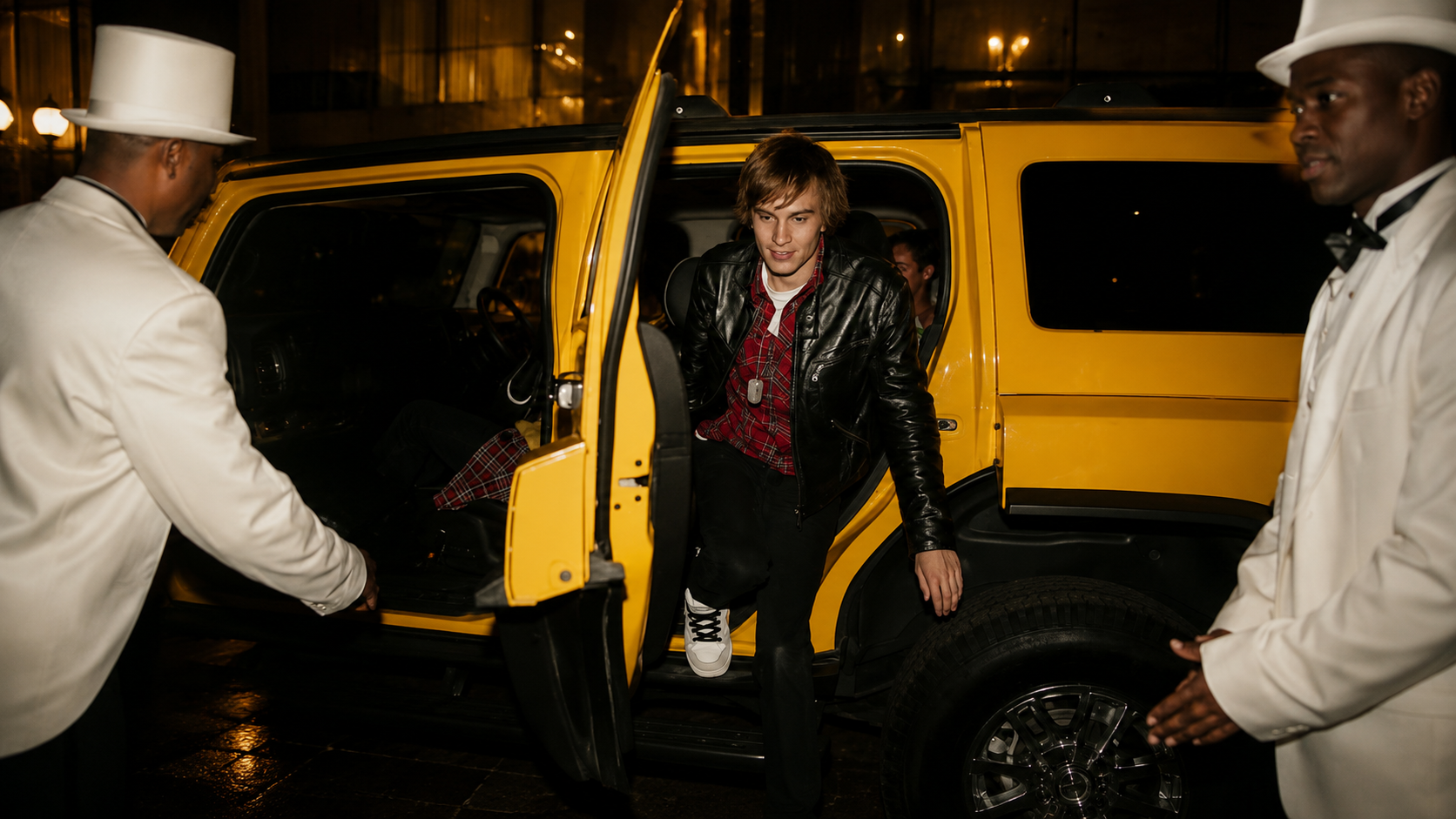
The experience began before guests even entered the building. They were collected from the parking area and transported to the venue in Hummers, transforming the arrival itself into the first act of the night. Photographers gathered around the entrance, where a grey-carpet arrival gave the evening the visual language of a premiere rather than an ordinary corporate launch. Television personality Muso from CrazE interviewed guests as they arrived, capturing the personalities and energy of Johannesburg's creative and entertainment community flowing into the venue.
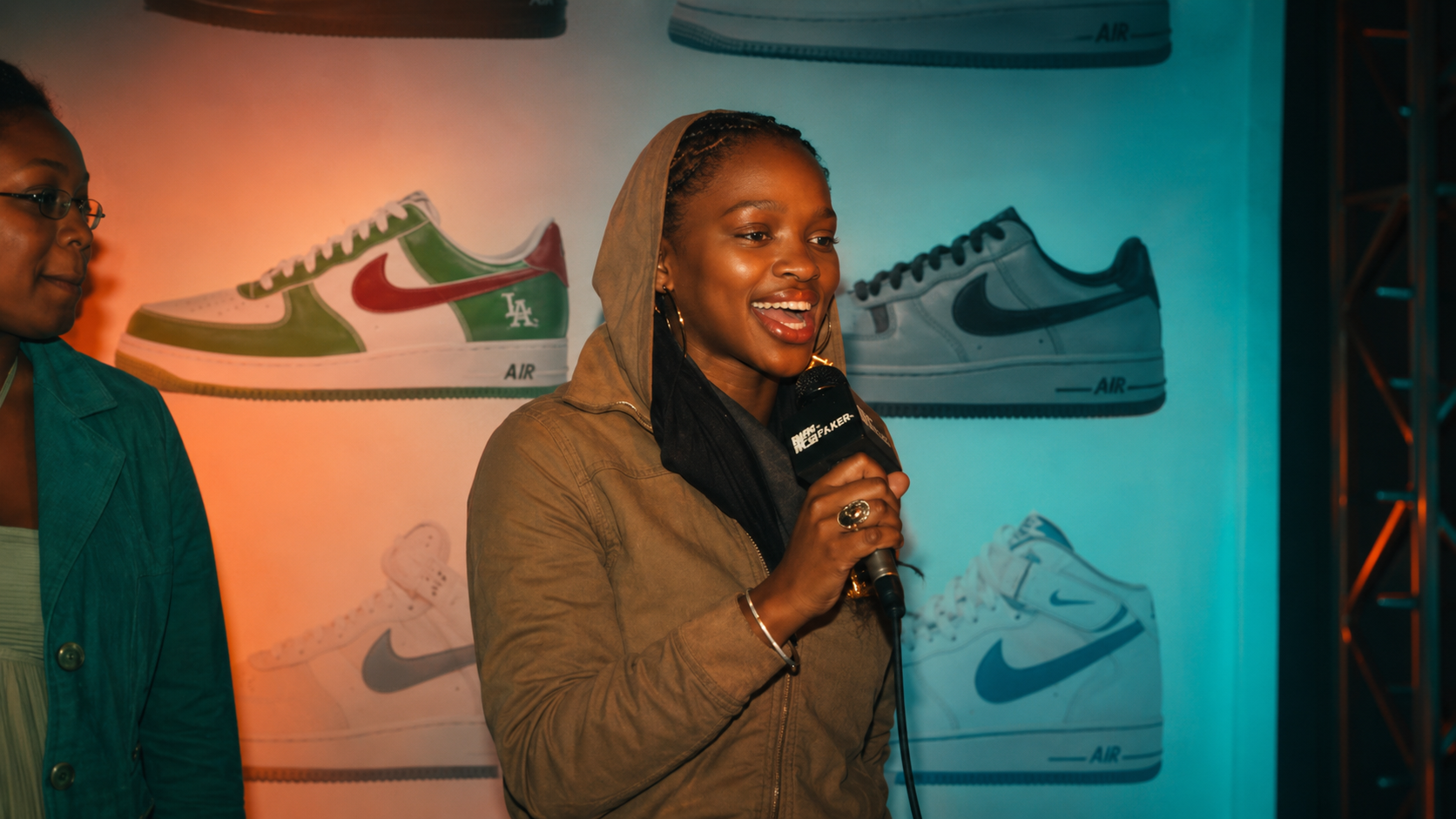
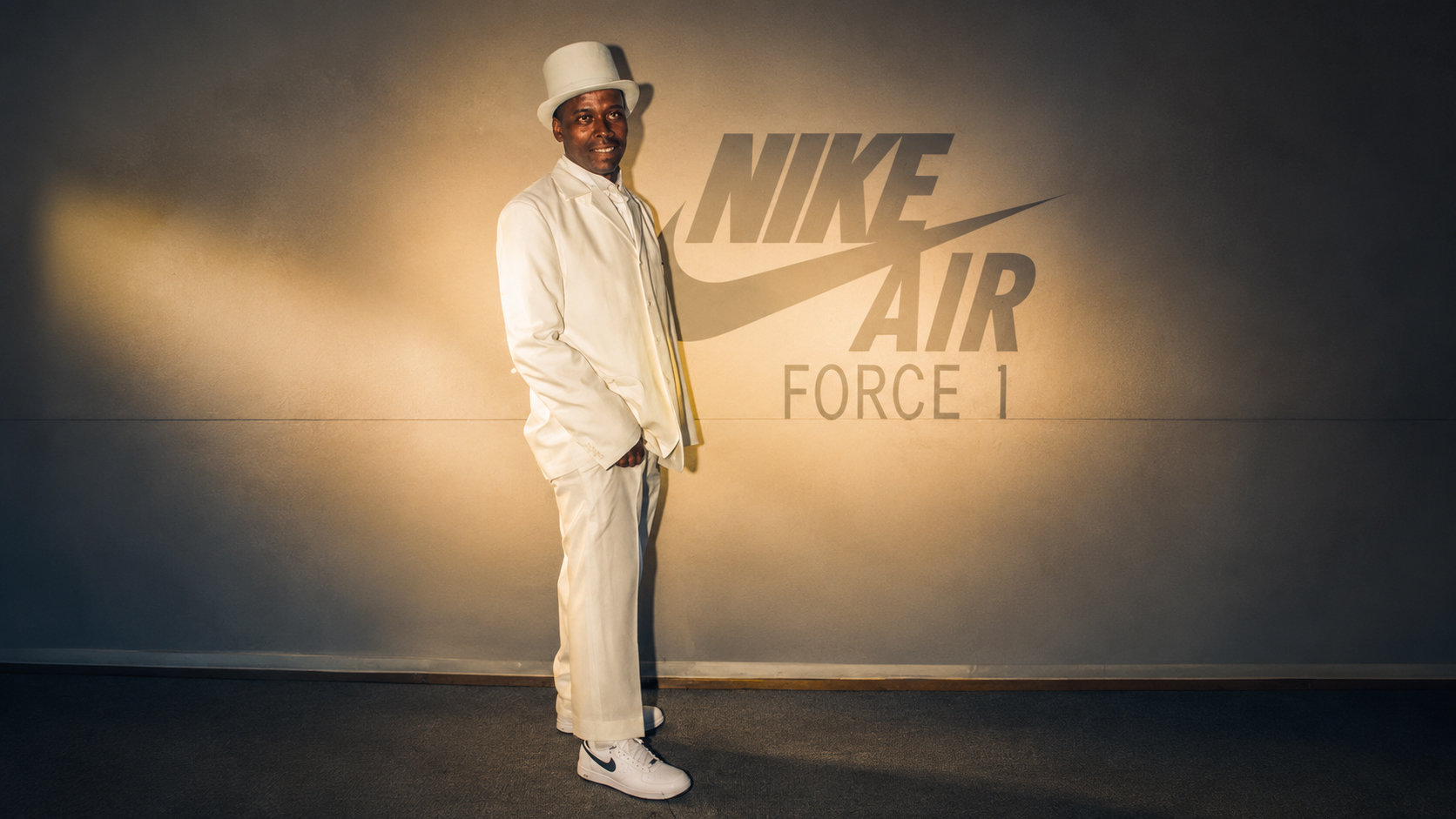
Inside, the Nike and MTV world expanded around them. There was an indoor basketball court, Nike teams dressed in branded hoodies and Air Force 1s, music, fashion, entertainment, personalities and a physical environment designed to make sport, street culture and nightlife feel as though they had always belonged together. Hip Hop Pantsula — HHP — was among the recognised music figures present, Tumisho Masha took to the basketball court, and Danny K was among the personalities documented inside the event.
Yet the evening was much more interesting than the spectacle alone suggested. To understand why Johannesburg mattered, it is necessary to go back to the beginning of Nike itself, then to the beginning of Air Force 1, and finally to the extraordinary cultural journey that carried the Swoosh from Oregon to the streets, football grounds, basketball courts, clubs and creative communities of Africa.
Nike's beginnings were far removed from the enormous global brand that existed by 2007. Bill Bowerman, the legendary athletics coach, and his former University of Oregon runner Phil Knight created Blue Ribbon Sports in 1964, initially distributing Japanese running shoes in the United States.
Bowerman continually experimented with footwear, cutting shoes apart, rebuilding them and searching for ways to make them lighter and more responsive. Knight brought the commercial instinct. Together they created a company built initially around running and the conviction that better footwear could change athletic performance. Blue Ribbon Sports eventually became Nike, taking its name from the Greek goddess of victory, and during the 1970s and 1980s the Swoosh steadily migrated beyond running. Nike entered basketball with increasing confidence, and by 1982 it was ready to introduce a basketball shoe that would eventually become one of the most important cultural products in the company's history.
The Nike Air Force 1, designed by Bruce Kilgore, was introduced in 1982 as the first basketball shoe to incorporate Nike Air technology.
Kilgore was solving a performance problem. Basketball was fast, aggressive and physically demanding, and athletes needed cushioning, support and stability capable of absorbing the repeated impact of the game.
Nike introduced the shoe through six prominent NBA players — Moses Malone, Bobby Jones, Michael Cooper, Mychal Thompson, Jamaal Wilkes and Calvin Natt — establishing Air Force 1 unmistakably as a basketball product.
But something happened that Nike could never have completely engineered through advertising.
The shoe developed a second life.
Nike designed Air Force 1 for basketball. The streets decided what it would become.
When the original Air Force 1 was withdrawn from Nike's regular line, retailers and sneaker communities in Baltimore discovered that demand simply refused to disappear. Customers still wanted the shoe, and stores began working with Nike on limited releases. From Baltimore the fascination spread through Philadelphia and New York, travelling the same East Coast corridor where basketball, street fashion, club culture and the rapidly expanding world of hip-hop were increasingly feeding into one another.
By the time the Air Force 1 reached New York in force, it was already ceasing to be merely sporting equipment. In Harlem, its connection with uptown style became so strong that Air Force 1s became known simply as “Uptowns.”
The white-on-white low emerged as one of the defining versions, its simplicity becoming its strength: white leather, clean lines, the Swoosh and that unmistakable sole. It could be worn with almost anything, and because the basic silhouette remained recognisable no matter how the colours or materials changed, the Air Force 1 became a perfect canvas for personal identity.
Hip-hop accelerated everything. Rappers began wearing Air Force 1s in photographs, performances and music videos. Jay-Z referenced them. Roc-A-Fella Records became embedded in the history of the shoe through its own celebrated Air Force 1 editions. Sneaker obsession became part of hip-hop language alongside records, jewellery, cars and fashion.
Then, in 2002, Nelly and the St. Lunatics released “Air Force Ones,” turning the relationship between the sneaker and hip-hop into a mainstream anthem.
What made Air Force 1 extraordinary was that none of these new identities entirely replaced the old one. It remained connected to basketball while becoming a fashion staple. It could be everyday footwear and a collector's object simultaneously. It could belong to a teenager buying a first pair and to a sneaker obsessive searching globally for an obscure limited edition.The shoe had become culturally portable, capable of arriving somewhere new without demanding that the people there inherit somebody else's interpretation of it.That quality would become enormously important when Air Force 1 moved into Africa.
During the 1980s, 1990s and early 2000s, African young people were exposed to an extraordinary flow of global culture. American basketball arrived through television. Hip-hop travelled through records, radio, tapes, music videos and channels such as MTV. Young audiences across the continent watched Michael Jordan, Run-DMC, LL Cool J, Tupac, The Notorious B.I.G., Nas, Jay-Z and generations of basketball and hip-hop personalities whose style made sneakers as culturally significant as the music itself.
But the relationship was never a simple story of America broadcasting and Africa receiving.
Johannesburg absorbed American hip-hop while creating kwaito, South African hip-hop and its own township fashion languages. Cape Town developed an increasingly confident sneaker, graffiti, street-art and design culture. Dakar had one of the continent's deepest relationships with hip-hop, yet Senegalese artists made that music unmistakably their own. Nairobi, Dar es Salaam and Kampala were building East African urban movements. Accra was becoming increasingly influential in fashion, art and music.
And Lagos was exploding.
Africa did not wait for permission to enter global street culture. It absorbed the influences, changed the language and began sending something entirely new back into the world.”
By the middle of the 2000s, Nigeria was still years away from the moment when Afrobeats would become an unavoidable global force, but the ingredients were already visible. Lagos was filled with extraordinary musical confidence, fashion, nightlife, entrepreneurship, football obsession and a young generation moving easily between African and international influences.
Nigerian artists did not need to sound like American rappers in order to become contemporary.
Increasingly, they were creating their own language of modern African culture, and that confidence would eventually help shift the direction of global popular culture itself.
For Nike, Africa offered another cultural language every bit as powerful as basketball and hip-hop: football.
And Nigeria would become one of the most important countries in Nike's early African football history.
Nike's relationship with Nigerian football began during the crucial period in which the company was attempting to establish itself as a serious global football brand. Nike signed the Nigerian national football team in 1995, placing the Swoosh on a team representing one of the most exciting generations African football had produced.
Then came Atlanta in 1996.
At the Olympic Games, Nigeria's men's football team produced one of the defining moments in African sporting history. They defeated a heavily favoured Brazil side in an extraordinary semi-final comeback and went on to defeat Argentina in the final, becoming the first African nation to win Olympic gold in men's football.Nigeria won that gold medal wearing Nike.
For Nigeria, it was a moment of enormous pride. For African football, it challenged long-established assumptions about the continent's place within the world game.
And for Nike, which was still establishing its authority in football against competitors with much longer histories in the sport, having Nigeria win the Olympic title in the Swoosh carried enormous significance.
The generation itself became iconic. Jay-Jay Okocha, Nwankwo Kanu, Sunday Oliseh, Daniel Amokachi, Emmanuel Amunike, Taribo West and Victor Ikpeba were among the names associated with a period in which Nigerian football seemed fearless, expressive and unpredictable.
They played with personality. Their football had rhythm and swagger, and that mattered because the Nigerian national team was never culturally confined to the pitch. Football shirts became fashion.
Players became celebrities. Music entered stadium culture. The greens and whites of Nigeria were woven into expressions of national identity far beyond ninety minutes of football.
When Nigeria won Olympic football gold in Nike in 1996, the Swoosh became part of something much larger than sport, an African moment of confidence, victory and possibility.
There was an intriguing similarity between what had happened to the Air Force 1 in America and what football culture did in Nigeria. In both cases, something designed primarily for sport escaped the boundaries of sport and became an expression of identity.
Nike's Nigerian relationship would evolve dramatically in the years that followed. Eventually the company would stop approaching Nigerian football design merely as the creation of another green national-team strip and begin looking much more deeply into the visual language of the country itself.
That later Naija design philosophy drew inspiration from Nigerian clothing, patterns, symbolism, craftsmanship and street style. References to agbada, Ankara-inspired pattern, eagle imagery and Nigerian design traditions entered a global Nike design vocabulary.
The lesson was profound. Nigerian identity did not need to be diluted in order to become internationally desirable. The more confidently Nigerian the design became, the more the world responded.
Years later, Nike's Nigerian football collections would become fashion statements internationally, worn by people who had never attended a Super Eagles match.
Lagos would become increasingly important at the meeting point between sport, music, streetwear and fashion, while global Nigerian stars and figures from the diaspora demonstrated the extraordinary creative loop connecting Lagos with London, New York and the wider world.
Yet in 2007, when Air Force 1 celebrated twenty-five years, much of that global recognition still lay ahead. What already existed was the energy beneath it, and people working inside Nike's African business understood that this was not an audience that should simply receive campaigns created somewhere else. That understanding was important to the Johannesburg project. Ade Kemi Benjamin and Greg Lewthwaite brought the perspective of Nike's senior African management directly into the campaign, helping ensure that the anniversary could speak to the cultural confidence emerging across the continent. Their role as Campaign Directors was therefore about more than executive oversight. They were part of the leadership that connected the enormous global heritage of Air Force 1 with the African reality in which this particular celebration needed to live.
Africa was changing quickly, and Johannesburg was one of the places where that change could be felt most strongly.
Nigeria was central to Nike's early relationship with African football, but the company's story across the continent extended much further.
African footballers were becoming some of the world's most visible athletes, and players such as Didier Drogba brought Côte d'Ivoire into the global sporting imagination while simultaneously becoming cultural figures beyond football. South Africa became increasingly important to Nike through football, running, community projects and youth culture. Ghanaian football and fashion developed their own relationship with the Swoosh, while Accra and its diaspora would eventually become part of the Air Force 1 story itself. Perhaps one of the most revealing later examples came through the Nike Air Force 1 Low “Little Accra,” a shoe inspired by the Ghanaian community of the Bronx in New York.
The design recognised the deep Ghanaian presence in that part of the city and connected Ghanaian culture directly back into the New York environment that had helped transform Air Force 1 decades earlier.
The circle was becoming complete. American basketball had helped create the shoe. Black American street culture and hip-hop had transformed it. Hip-hop carried Air Force 1 into Africa, where young people folded it into their own cultures.
At the same time, African migrants and diaspora communities were reshaping the American and European cities from which so much of that culture had originally travelled. Influence was no longer moving in one direction across the Atlantic. It was travelling backwards and forwards continuously.
Nike understood that an object with that history could not celebrate its twenty-fifth anniversary like an ordinary product launch. The people who had given Air Force 1 its cultural life had to be central to the celebration.
The global anniversary began dramatically in New York City on 10 December 2006, when Nike staged its landmark Air Force 1: 1 Night Only celebration at Gotham Hall. MTV cameras were there to capture the event, bringing together four extraordinary voices from different generations of hip-hop: KRS-One, Rakim, Nas and Kanye West.
The combination carried enormous symbolic weight. KRS-One and Rakim represented foundational eras of hip-hop lyricism. Nas embodied another defining chapter of New York rap. Kanye West represented the rapidly changing sound and aesthetic of contemporary hip-hop.
Legendary producer Rick Rubin was connected to the anniversary music project, while the wider creative campaign would eventually produce “Classic (Better Than I've Ever Been)”, further connecting the history of Air Force 1 with the music that had embraced it.
The physical scale of the New York celebration was equally extraordinary. Nike assembled more than a thousand different pairs of Air Force 1s drawn from its archive and important private collections, effectively surrounding the performances with a visual history of twenty-five years of design, collecting and cultural reinvention.
DJ Clark Kent, one of the most respected figures connecting New York DJ culture and sneaker collecting, was closely associated with the anniversary celebrations.
The twenty-fifth anniversary was never really about looking back at a shoe. It was about celebrating the artists, athletes, DJs, streets and cities that had kept reinventing what Air Force 1 meant.
The New York event became an MTV special, bringing Nike and MTV together around something much bigger than a conventional sponsor relationship. Nike understood sport, product and design. MTV understood music, storytelling, artists and youth culture. Air Force 1 existed precisely at the point where those worlds had converged.
The anniversary also brought Nike back to the shoe's basketball origins. The company introduced the Air Force 25, a contemporary basketball successor inspired by the original, while “The Second Coming: Our Game. Our Time.” campaign assembled an extraordinary generation of NBA talent including LeBron James, Kobe Bryant, Steve Nash, Amar'e Stoudemire, Rasheed Wallace, Jermaine O'Neal, Tony Parker, Paul Pierce, Shawn Marion and Chris Paul.
Everything was connected: the original basketball heritage, the new generation of players, the music that had adopted the shoe, the designers who continually reinvented it and the cities that had each made Air Force 1 their own.
The anniversary travelled internationally not as an identical roadshow, but through different interpretations of what Air Force 1 meant in each city.
In Tokyo, Nike worked with realmad HECTIC on the 1LOVE Air Force 1 concept destination in Harajuku, opening on 26 January 2007 and bringing together Air Force product, Air Force 25 and customisation through NikeID. Japan had become one of the world's most influential centres of sneaker collecting and streetwear, and the anniversary acknowledged that importance.
In London, Nike moved Air Force 1 into the fashion and creative environment of Dover Street Market, where a twenty-five-day installation during February and March 2007 connected footwear with art, design and music culture.
In Mexico City, a Nike Air Force 1 25th Anniversary Party took place at Estación Indianilla on 23 March 2007. Surviving photographic records confirm the event and location, although a complete verified artist and DJ line-up has not emerged from the surviving public archive.
In Toronto, the Air Force 1 anniversary became part of the One Door project, culminating in a celebration on 10 May 2007 associated with The Drake Hotel, with DJ Clark Kent and Toronto's DJ Starting From Scratch bringing the musical lineage of the shoe directly into the room.
Then, in July, the story reached Johannesburg.
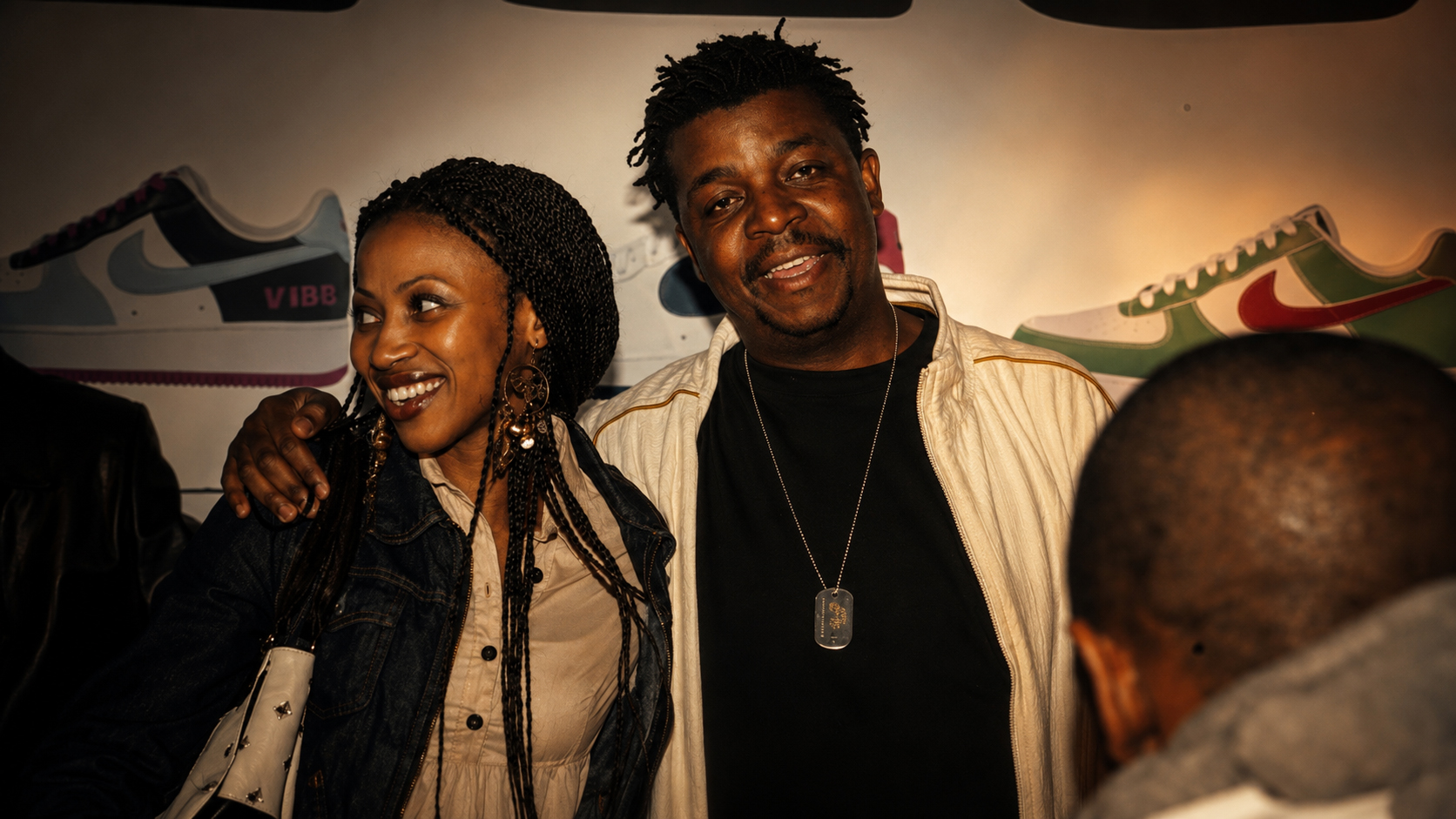
The Johannesburg event was never supposed to feel like somebody had packed New York into flight cases and rebuilt it in South Africa. That would have missed everything that made the moment relevant.Johannesburg already had the culture.By 2007, the city was producing its own influential music, television, fashion, nightlife and creative movements. Kwaito had already fundamentally changed South African youth culture, creating its own stars, language, dress codes and attitude. South African hip-hop was becoming increasingly confident. House music was deeply embedded in nightlife. Township style crossed into mainstream fashion. Television and music were feeding one another, and the first generation of a genuinely pan-African MTV youth audience was emerging.
The Nike Air Force 1 anniversary therefore needed to live inside Johannesburg rather than simply be staged there.
The leadership relationship between Nike and MTV was fundamental to achieving that. On the Nike side, Ade Kemi Benjamin and Greg Lewthwaite, as senior members of the company's African management and Directors of the campaign, were central to shaping and enabling the project. They brought Nike's brand ambitions, African market understanding and confidence in the creative partnership with MTV into the room, providing the senior leadership and support that allowed the Johannesburg celebration to develop as an ambitious cultural event rather than a conventional launch. Their contribution was essential because the strongest brand partnerships are rarely created by simply placing two logos beside one another. They happen when the people responsible for both brands trust each other enough to create something neither organisation would have produced alone. Benjamin and Lewthwaite recognised the value of MTV's connection to African youth, music and entertainment culture, while MTV understood the extraordinary global history Nike and Air Force 1 were bringing into the collaboration.
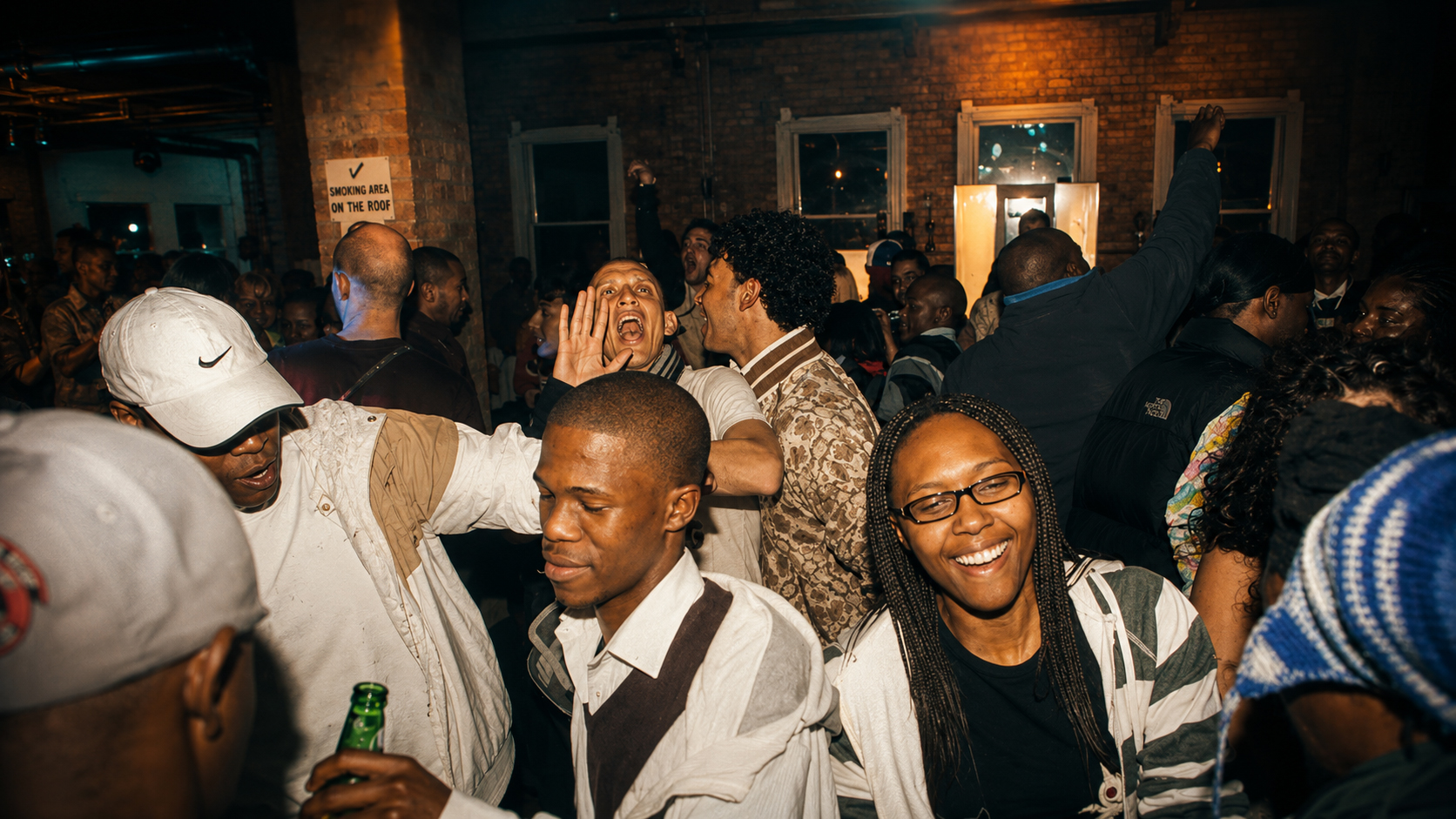
On the MTV side, Jandre Louw was Head of Events, Marketing and Digital Media and served as Creative Director and Producer, heading the campaign and event production.
Working within the campaign direction and Nike partnership led by Ade Kemi Benjamin and Greg Lewthwaite, Louw carried the project from the creative idea into the physical and live experience.
The project was built holistically rather than as a collection of disconnected pieces. Louw created and designed the creative identity for the event and all of its creative items, while also designing the stage, sets and physical event environment.
He directed the event itself, headed the production and staging, and carried the show through its live execution and showcalling.
What made the partnership work was the complement between those roles. Benjamin and Lewthwaite helped set, protect and drive the Nike ambition for the campaign, while Louw translated that ambition through MTV into the creative world, production design and live experience of the Johannesburg event.
It became a genuine collaboration between brand leadership and creative execution, anchored around a shared understanding that African audiences deserved something culturally relevant, ambitious and original.
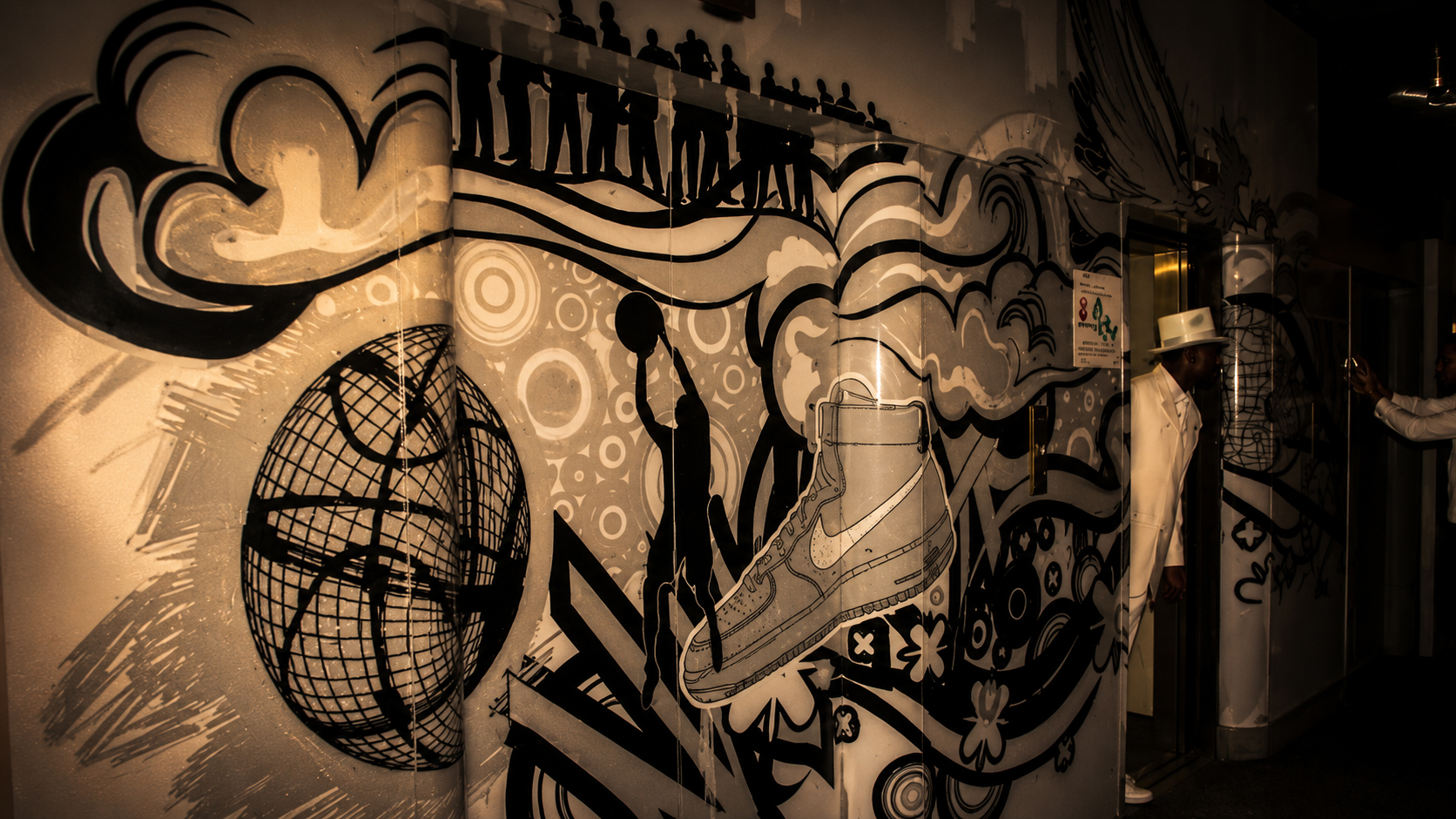
That continuity between concept and execution was fundamental to the way the event came together. The identity needed to become architecture; the architecture needed to become theatre; and the theatre needed to support music, personalities and basketball without any of those elements feeling artificially assembled around a product display.
Johannesburg could never simply be the city written beneath the Nike logo. The city itself had to become part of the creative language of the night.
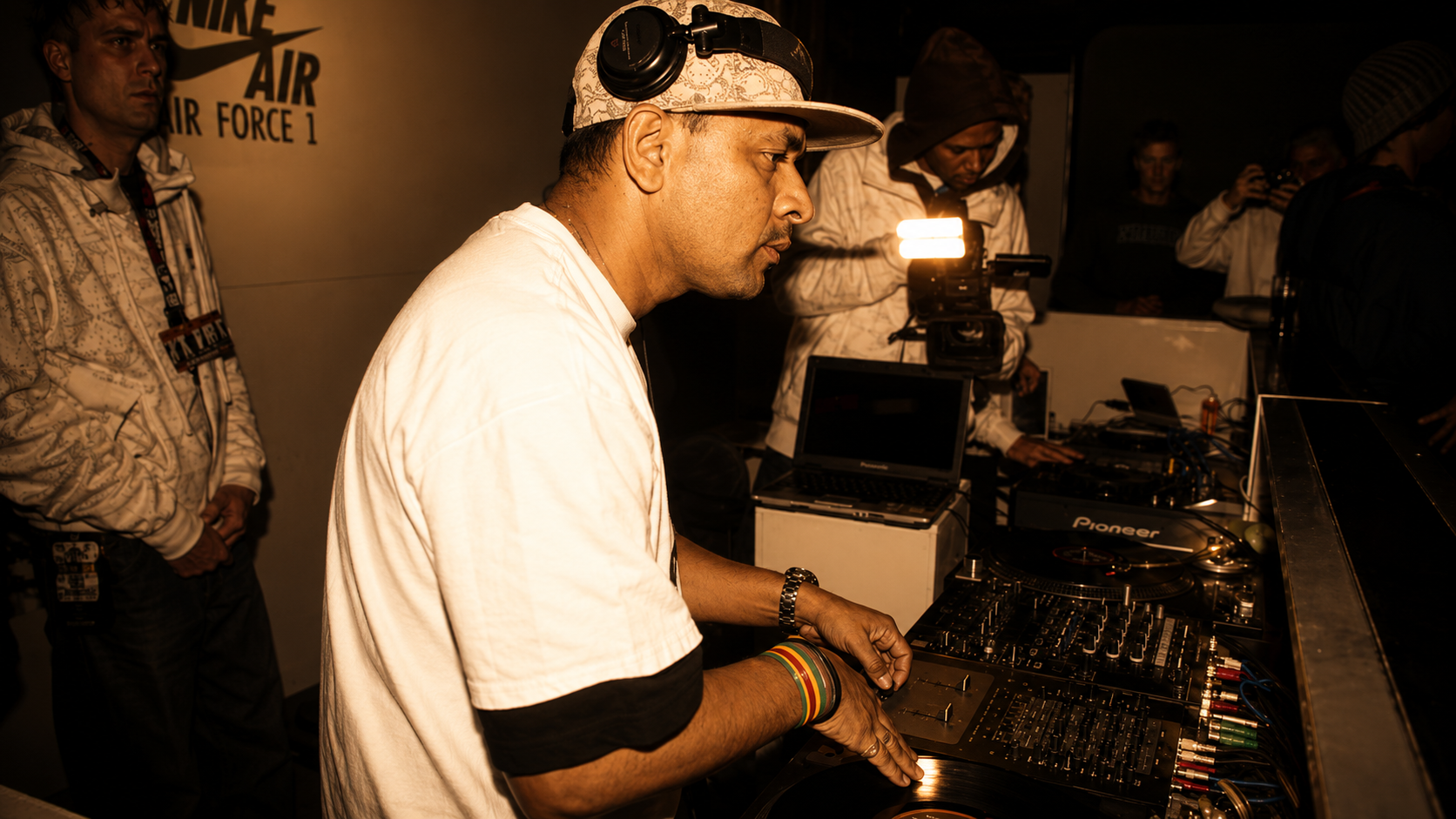
The Air Force 1 was never a shoe that had achieved its status by sitting untouched on a plinth. Its mythology came from movement. It was worn on basketball courts, walked through city streets, danced in clubs and appeared in music videos. It accumulated creases, stories and associations. The environment in Johannesburg therefore needed to feel alive in exactly the same way.
The indoor basketball court gave the production a physical connection back to 1982 and the shoe's original purpose, but around that court was an unmistakably Johannesburg cultural world. Music, television personalities, street fashion, photography and nightlife flowed through the venue. The guests themselves became part of the visual composition of the evening rather than simply spectators standing around a branded installation.
The arrival experience established that tone immediately. Guests moving from the parking area into chauffeur-driven Hummers passed from the everyday city into the staged world of the event. At the entrance came cameras, the grey carpet and interviews with Muso. Inside, the basketball court, Nike product, lighting, architecture, personalities and music pulled the story together. The presence of HHP was particularly meaningful within that environment. Hip Hop Pantsula represented a South African form of hip-hop that did not need to reproduce New York in order to be legitimate.
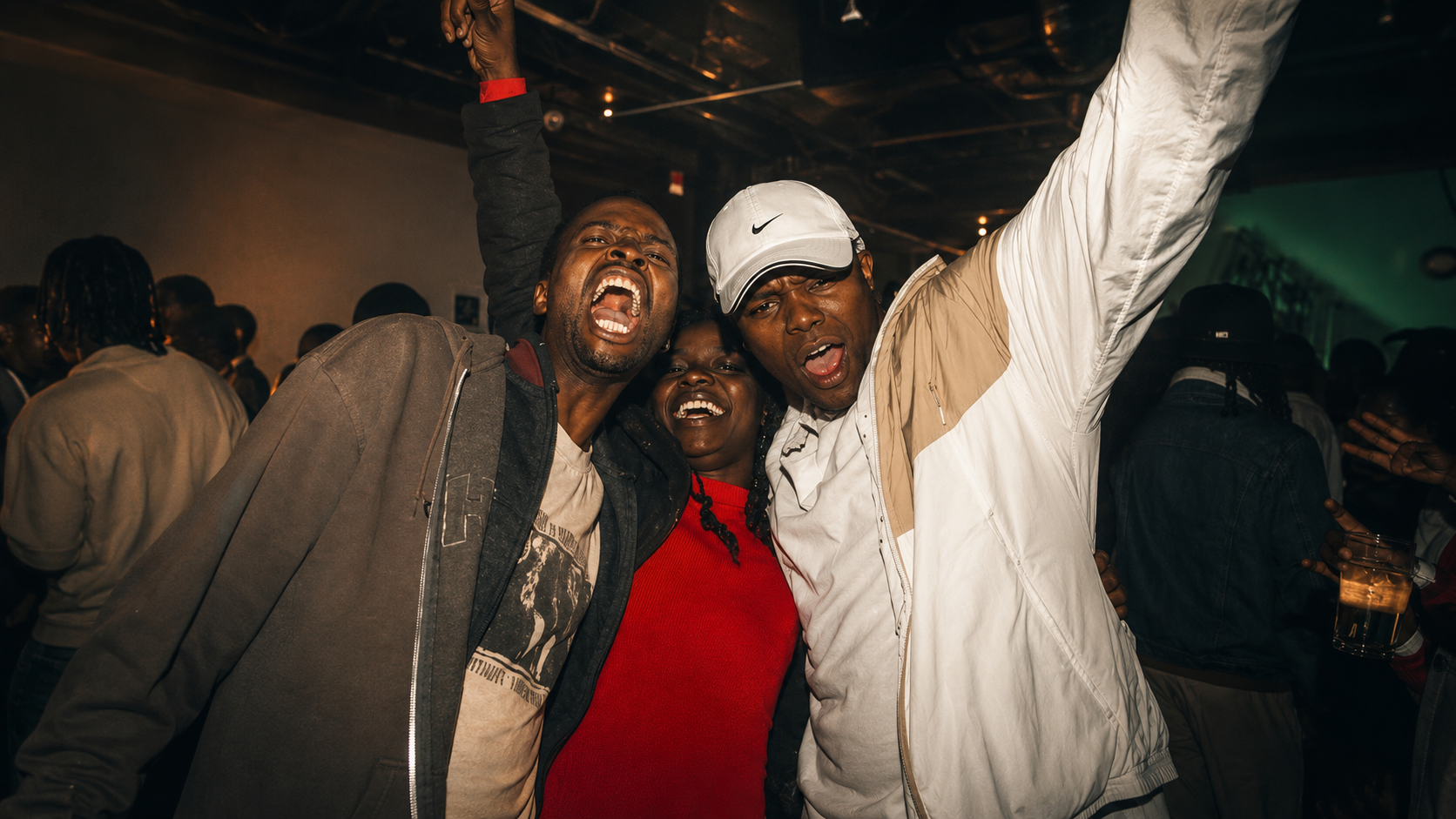
His music could be globally aware and unmistakably local at exactly the same time, which was precisely the kind of cultural confidence the entire evening represented.
Tumisho Masha stepping onto the basketball court reinforced the sport at the origin of the Air Force story, while Danny K was among the recognised South African personalities captured at the celebration. Muso's role interviewing arriving guests added another layer of television culture to an event already positioned at the meeting point between Nike and MTV.
Nearly two decades later, the surviving public archive captures the atmosphere and many of the personalities from the Johannesburg party but does not preserve a complete reliable formal artist and DJ running order. HHP, Tumisho Masha, Danny K and Muso are documented as being present, but presence alone should not automatically be reconstructed as a billed live performance. Until an original Nike or MTV invitation, production schedule, call sheet, artist contract, running order or showcalling document emerges, the complete Johannesburg performance and DJ roster is best recorded as not yet independently verified.
There is something important about preserving that distinction. History becomes more powerful, not less, when the atmosphere we remember is separated carefully from the details the archive can prove.
Johannesburg and Cape Town were not waiting to be introduced to sneaker culture. By 2007, they were already creating distinctly African versions of it.
The South African Air Force 1 story of 2007 did not end on Commissioner Street. In Cape Town, another part of the country's emerging sneaker culture was taking shape around Shelflife, which had opened only the year before and would eventually become one of the most important institutions in South African sneaker retail and streetwear.
During August 2007, the Rock Paper Sneakers project at Shelflife, 119 Loop Street, brought footwear, art and design together through extraordinary paper interpretations of sneaker culture. Japanese paper artist Shin Tanaka was associated with the project, alongside an emerging South African creative community spanning street art, illustration, design and music.
The Cape Town activation was distinct from the Nike × MTV Johannesburg birthday party, but together they revealed how broad the South African Air Force 1 conversation was becoming.
Johannesburg expressed the shoe through nightlife, entertainment, music, personalities and basketball, while Cape Town connected it increasingly with design, street art, collecting and the emerging sneaker boutique movement.
Both cities were showing the same underlying truth: African audiences were not passive consumers of global sneaker culture. They were interpreting it, reshaping it and making it local.
The deeper story was never simply about Nike coming to Africa. It was about the moment African culture began moving visibly back through the Swoosh and into the global creative conversation.
Looking back now, many of the African developments that followed make the 2007 Johannesburg celebration feel even more significant.
Nike's Nigerian relationship would eventually become one of the clearest examples of African visual identity moving into global sportswear design. The Nigerian national-team collections demonstrated that culturally specific African patterns and references could become internationally desirable precisely because they were culturally specific.
The Ghanaian diaspora would find itself represented in an Air Force 1 through Little Accra, linking Ghana back into the Bronx and into the New York history of the shoe.
South Africa would become the focus of enormous Nike investment and creativity around the 2010 FIFA World Cup, including Nike's football training initiatives in Soweto and spectacular visual interventions in Johannesburg. The company would also work increasingly with African athletes, designers and communities across the continent.
Years later, Nike's collaboration with the Air Afrique creative collective would produce the Air Max RK61, drawing inspiration from the historic pan-African airline and the cultural connections between Africa and its diaspora. The campaign included figures such as Didier Drogba, Oumou Sangaré and Marie-Josée Ta Lou-Smith, turning African history, movement and memory into the foundation for a contemporary global Nike story.
That project was not an Air Force 1 collaboration, and it came many years after the Johannesburg celebration, but culturally the progression is revealing. Nike's relationship with Africa had gradually evolved from sponsoring athletes and teams in Africa, to creating campaigns for African audiences, to drawing directly from African heritage and African creativity as sources of global design.
What had once been movement primarily toward Africa was increasingly becoming movement from Africa to the world. And that change was already visible, in an earlier form, on Commissioner Street in 2007.
The extraordinary thing about Air Force 1 is that its history cannot be told as a straight line.
It began with Bruce Kilgore designing a basketball shoe in 1982. Basketball players took it onto the court, but Baltimore retailers and their customers refused to allow it to disappear. New York adopted it. Harlem renamed it. Hip-hop made it part of its visual vocabulary. Rappers placed it in lyrics and songs. DJs and collectors obsessed over individual versions. Fashion embraced it. Tokyo reinterpreted it. London curated it. Toronto celebrated it. Mexico City made it part of its own anniversary culture.
And Africa wore it.
But Africa's relationship with Nike was developing through many other routes at exactly the same time. Nigeria had already placed the Swoosh at the centre of one of African football's greatest moments when the Super Eagles won Olympic gold in Atlanta in 1996. Nigerian footballers were becoming global stars, while Lagos was building the musical and cultural confidence that would eventually reshape international popular culture. Johannesburg was creating its own language through kwaito, hip-hop, television, fashion and nightlife. Cape Town was developing a sophisticated sneaker, graffiti and design community. Ghanaian culture and its diaspora were feeding back into New York itself.
By the time Nike and MTV opened the doors on Commissioner Street on 12 July 2007, Africa was therefore not arriving late at somebody else's cultural party. Africa had already been part of the story for years. What was changing was that the rest of the world was beginning to recognise just how important that part of the story would become. The Johannesburg event succeeded because there was real commitment on both sides of the partnership. Ade Kemi Benjamin and Greg Lewthwaite, as Nike's senior African management and Directors of the campaign, were essential to the leadership that made the project possible.
They recognised the opportunity to connect one of Nike's most important global cultural icons with the rapidly changing African creative landscape and backed the ambition required to do it properly.
For Jandre Louw, working as MTV's Head of Events, Marketing and Digital Media and as Creative Director and Producer of the Johannesburg celebration, that leadership created the space in which the creative idea could become reality. The task was never simply to place Nike and MTV logos around a party and commemorate the birthday of a famous sneaker. It was to take twenty-five years of basketball, hip-hop, fashion, design and street culture and translate that history into an experience that could belong authentically to Johannesburg.
That meant creating the identity of the event and designing every aspect of its creative language. It meant designing the stage and sets and shaping the environment through which guests would move.
It meant directing the event, heading the production and staging and then taking the concept all the way through to its live execution and showcalling. Every part needed to feel connected to the same central story.
The campaign therefore became the product of a genuine meeting between leadership and creativity: Ade Kemi Benjamin and Greg Lewthwaite directing the campaign for Nike in Africa, and Jandre Louw leading its creative direction, production and live execution for MTV. Together, those responsibilities connected global Nike heritage, African market leadership, MTV's cultural reach and the physical experience of Johannesburg into one story.
Most importantly, Johannesburg could not simply become the geographical location printed beneath an international Nike campaign. Johannesburg itself needed to become part of the narrative.
We were not simply bringing twenty-five years of Air Force 1 history to Johannesburg. We were creating a space in which Johannesburg could write itself into that history.
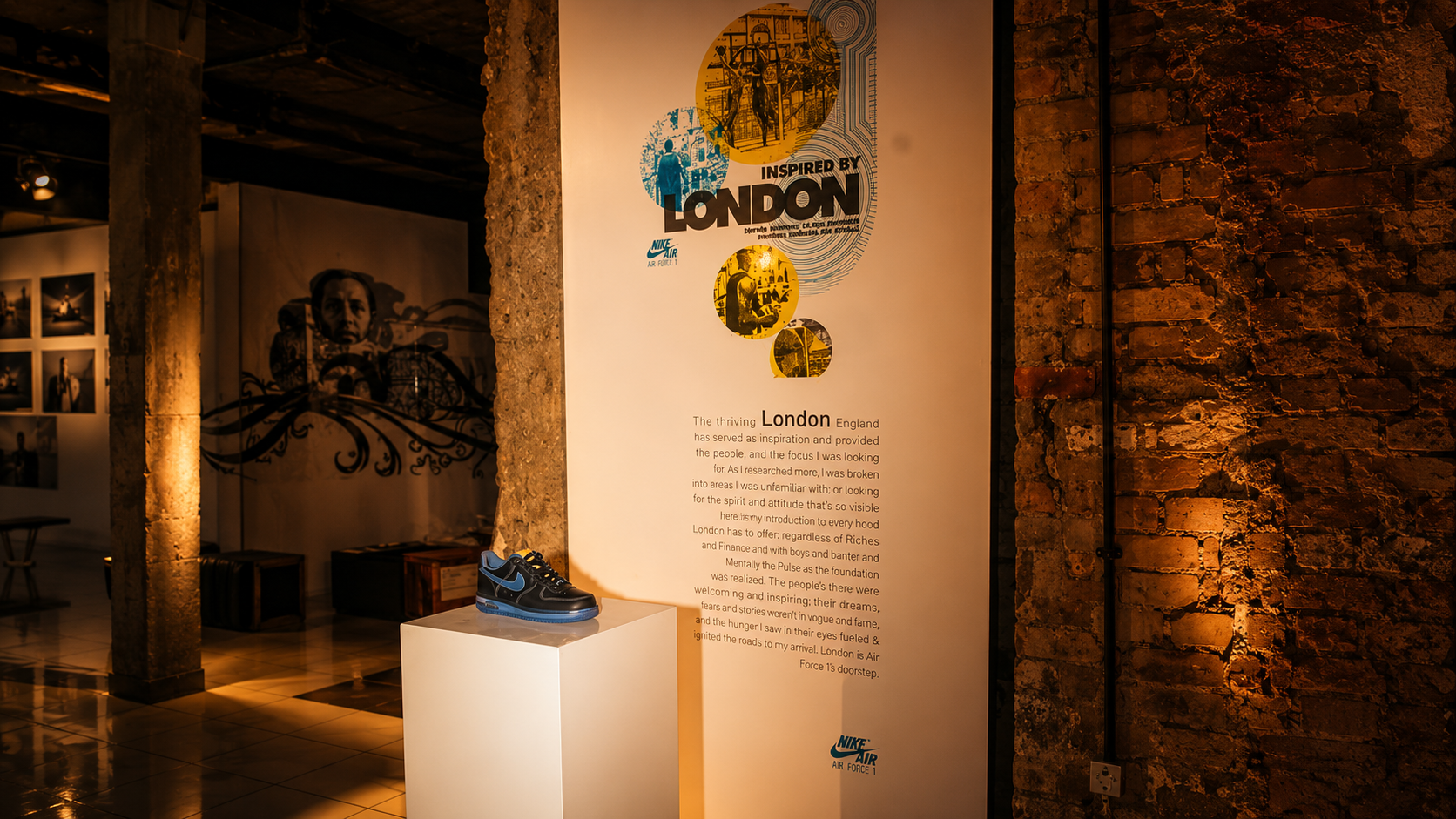
That is perhaps why the night remains so revealing. The fundamental principle that had made Air Force 1 extraordinary for twenty-five years was happening again inside that building.
Nike could design the shoe, manufacture it and place the Swoosh on the side, but it could never completely determine what the shoe would ultimately mean. That belonged to the people and cultures that adopted it.
From basketball courts in America to Baltimore; from Baltimore to Harlem; from Harlem into hip-hop; and from hip-hop across the Atlantic, the shoe continued to change meaning every time it entered a new community.
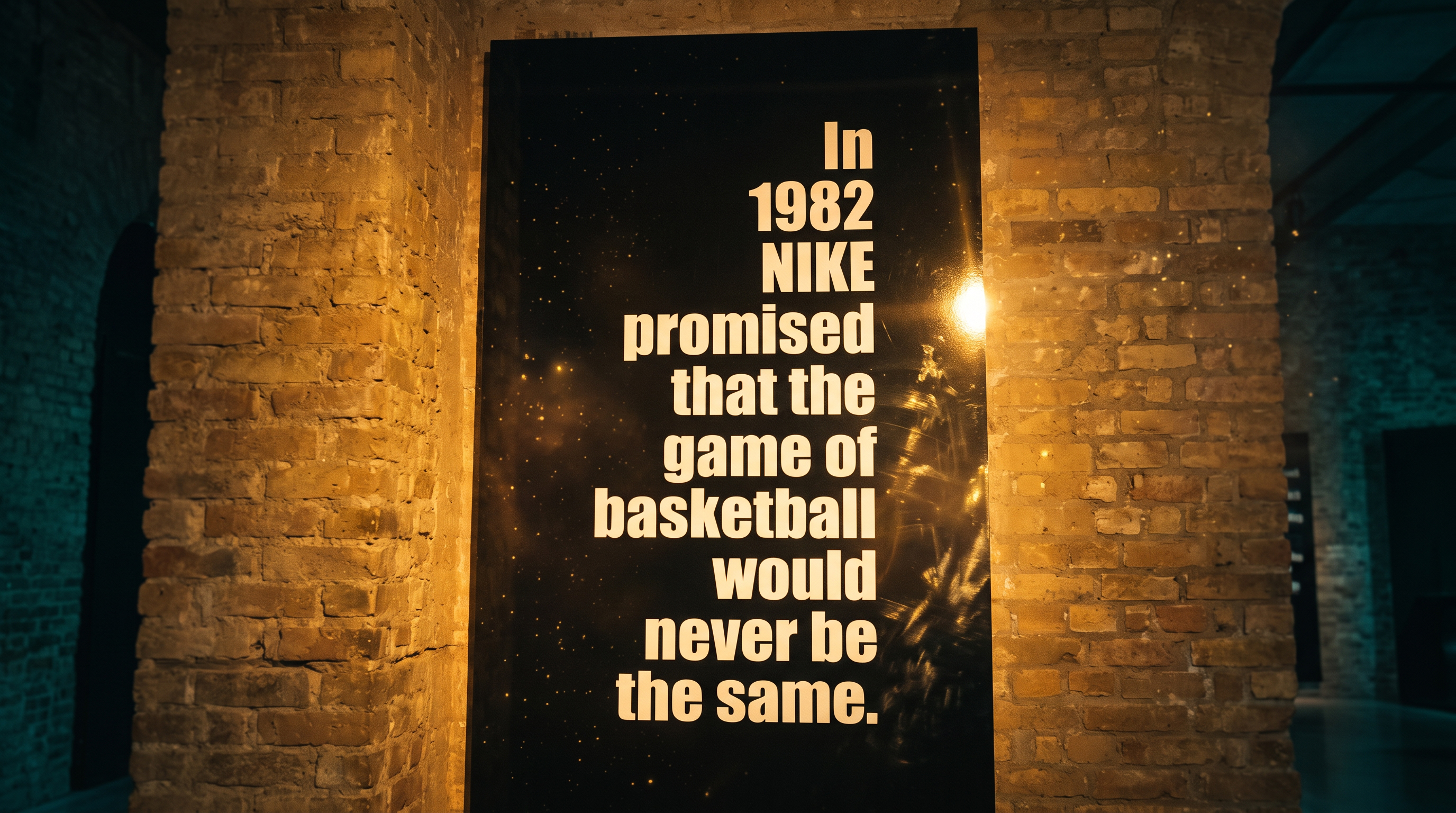
The same cultural movement could be seen in Nike's relationship with Nigeria, from the Olympic champions of 1996 to the streets and creative communities of Lagos. It could be seen in Johannesburg's music, fashion and nightlife, in Cape Town's sneaker and design culture, and in the Ghanaian diaspora carrying Accra back into the Bronx.
Eventually, African heritage itself would begin influencing new generations of global Nike design. The Air Force 1 had spent twenty-five years demonstrating that culture never moves in a straight line. It crosses borders and oceans, changes hands, absorbs new languages and returns transformed.
Air Force 1 endured because every generation and every city was able to inherit the same shoe and tell a different story through it.
On Commissioner Street in Johannesburg that winter night in 2007, Ade Kemi Benjamin and Greg Lewthwaite for Nike, together with Jandre Louw and the MTV team, were not simply celebrating where Air Force 1 had travelled during its first twenty-five years. They were bringing one of the world's great cultural sneaker stories into conversation with an Africa that was becoming increasingly confident about writing its own.
And perhaps without fully knowing how dramatically that global cultural balance would change in the years ahead, we were standing in one of the places that would help define where the story was going next.
NIKE AIR FORCE 1
25 YEARS OF FORCE
Nike X MTV
The Johannesburg Birthday Party, 2007
Jandré Louw
Head of Events, Marketing and Digital Media
MTV Networks Africa
Creative Director
ProducerHead of Campaign Production
Event Director
Production & Staging Director
Showcaller
Creative Concept & Event Creative Direction
Creative Identity Creator & Designer
Stage Designer
Set & Environment Designer
Event Creative Designer
Campaign & Event Creative Materials
Creator & Designer
Overall Visual & Experiential Direction
Live Event Production & Execution
SENIOR EXECUTIVE, CAMPAIGN & PRODUCTION NIKE AFRICA
Nike Africa Campaign Leadership
Ade Kemi Benjamin
Senior Management, Nike Africa
Campaign Director
Greg Lewthwaite
Senior Management, Nike Africa
Campaign Director
MTV NETWORKS AFRICA
Alex Okosi
General Manager and Senior Vice President
MTV Networks Africa
Dudu Qubu
Head of Production
MTV Networks Africa
Photography Note: All photographs reproduced in this publication originate from original images taken at the time of the events depicted. Some source files are small or of very limited or low resolution because they were captured many years ago using early-generation Nokia, Motorola and BlackBerry mobile handsets, whose cameras had significantly lower image-quality and resolution capabilities than those available today. Where necessary, selected photographs have been enlarged, upscaled, depixelated and resolution-enhanced to improve clarity and presentation. AI-assisted tools were used solely for these technical restoration and display purposes. No people, objects, settings or material visual content were added, removed or generatively altered; the photographs remain faithful to the original moments as they were captured as the actual photographs.