


MTV VJ Search Africa was about far more than finding television presenters. It was about opening the doors of MTV and discovering the young African voices through whom a generation could see, hear and recognise itself, across the continent and globally.
There was something fundamentally different about the idea behind the MTV VJ Search in Africa. It was never simply a television casting exercise, and it was never really about finding someone who could stand in front of a camera and introduce the next music video. From the beginning, it was about finding people who could become part of the identity of MTV itself, young Africans who understood the culture around them because they were living inside it, and who could carry that culture onto television without losing the authenticity that had made us notice them in the first place.
Those formative years of MTV Base were filled with exactly this kind of possibility. We were building something new across the continent, and every project seemed to ask the same larger question in a different way: what should MTV feel like when Africa was not simply another territory receiving the brand, but an active participant in shaping it?
The answer could never come exclusively from offices, programming meetings or international television formats. It had to come from the streets, universities, clubs, music scenes and communities where the culture was actually being created. It had to come from Johannesburg and Durban, Cape Town and Nairobi, Kampala, Dar es Salaam and Lagos. It had to sound like the people who were watching us.
The VJ Search became one of the most direct ways of opening that door. We were looking for much more than conventional presenters. We wanted people who knew music not because they had memorised a script, but because music was already part of the way they understood the world.
They needed to recognise the artists, the references, the fashion, the language, the humour and the attitudes of their generation. They needed to be able to walk onto a stage in front of thousands of people, hold their own in an interview with an international superstar, turn to a television camera and speak naturally, and somehow remain themselves through all of it.
That was the difficult part. Television can make people perform a version of themselves. The minute a camera appears, personalities change, voices change and people begin presenting rather than communicating. We were searching for those rare individuals who became more interesting when the camera turned on, not less authentic.
An MTV VJ needed that quality because the VJ had never simply been the person between the music videos. Throughout MTV’s history, its presenters became part of the personality of the network. They stood backstage with artists, reported from awards shows and festivals, conducted interviews, hosted live broadcasts and often became cultural interpreters for the audiences watching them. They were the human connection between MTV and the world of music and youth culture it represented.
In Africa, that role carried another layer of meaning. If MTV Base was genuinely going to belong to African audiences, then eventually the people on screen needed to look, sound and feel like the continent itself.
The VJ Search became part of how we made that transition.
The next generation of MTV Africa could not simply be selected from inside the television industry. We had to go into the audience, open the doors and find the people who were already living the culture.

Before the searches began producing a generation of homegrown African MTV VJs, there was already an important presenter foundation being established around the channel. It came through an unusual combination of personalities who represented different parts of the MTV world: Trevor Nelson, broadcasting out of London and carrying enormous credibility in global Black music culture; China Moses, arriving from MTV France with the unpredictable energy and attitude of European MTV; and Shashi Naidoo, an emerging South African television personality who brought an immediate local connection to the screen.
They were very different personalities, and that was precisely why the combination worked.
Trevor Nelson already carried the authority of someone who had spent years inside music rather than merely reporting on it. By the time MTV was establishing its dedicated African presence, he was one of Britain’s most recognised and respected Black-music broadcasters, known especially for his deep association with R&B, soul and hip-hop and for his work on The Lick, one of MTV’s defining music shows.
What Trevor brought into the African story went beyond presenting experience. He understood the enormous network of cultural connections that already existed between Africa, Britain, the United States, the Caribbean and the wider African diaspora. These worlds were not separated from one another. African music was influencing music elsewhere, while hip-hop, R&B, dancehall and British Black culture were simultaneously finding enormous audiences across Africa. Trevor understood those relationships instinctively.
There was also an important symbolic value in having someone of his stature involved in MTV’s early African presenter identity. MTV Base was new, but it was not being created on the margins of MTV. The African channel belonged inside the same global cultural universe as the network’s most recognised channels, shows and personalities. Trevor’s presence reinforced that from the beginning.
Years later, there would be a wonderful continuity in seeing him return to Africa to host the inaugural MTV Africa Music Awards in Abuja in 2008. By then, African music had moved even more visibly towards the centre of MTV’s international conversation, and Trevor, who had been part of that early presenter bridge, was standing on the stage of the first major MTV awards platform created specifically to celebrate contemporary African music.

Alongside Trevor was China Moses, whose energy was entirely different. China came from MTV France, and she possessed exactly the kind of personality MTV had always understood how to use well: intelligent, spontaneous, slightly unpredictable and impossible to reduce to the conventional idea of a television host.
As the daughter of legendary jazz vocalist Dee Dee Bridgewater and theatre and film director Gilbert Moses, she had grown up inside an extraordinarily creative environment, but her own personality was what made her so compelling on screen.
China became particularly important around the first South African VJ Search because she helped introduce the finalists through MTV Base World Chart Express.
There was something beautifully appropriate about an established MTV presenter being part of the television environment that would eventually hand the screen over to a young African personality discovered through an open public audition.
Then there was Shashi Naidoo, who represented another part of the transition. Shashi was a rising South African actor, model and television personality, and she brought a recognisable local energy to the early presenter mix.
She belonged to a generation of young South Africans increasingly visible across fashion, entertainment, advertising and television, and audiences could immediately recognise something of themselves in her.
Trevor carried the authority of international Black music broadcasting, China carried the attitude and creative freedom of MTV’s European culture, and Shashi brought the energy of an emerging South African entertainment generation.
Together they helped establish the first bridge between the MTV audiences already knew internationally and the new African platform we were creating.
But a bridge was only the beginning. What we really needed was a mechanism through which MTV could start finding its future presenters directly from the audiences themselves.
That was where the MTV VJ Search Africa began.
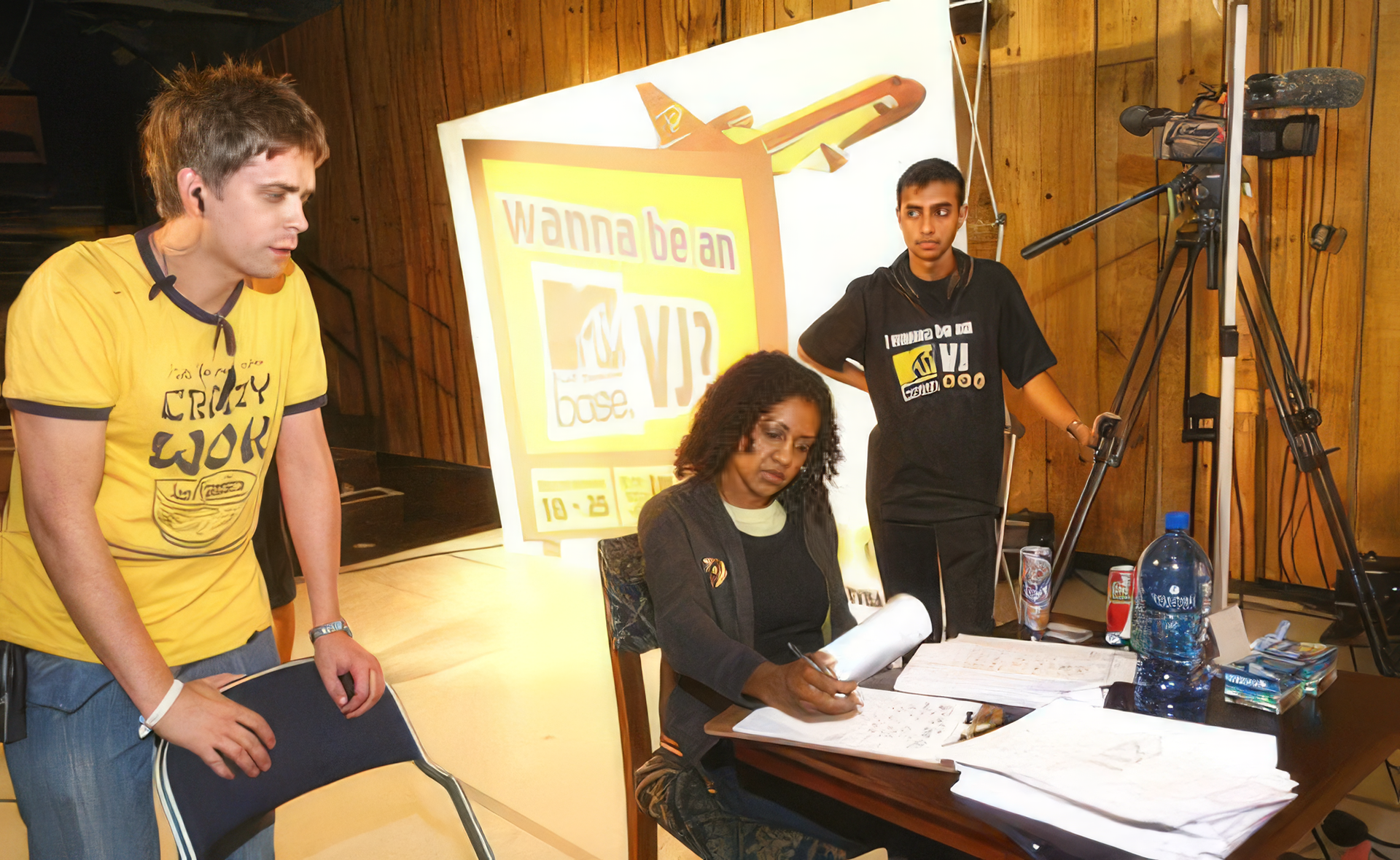
For me, the VJ Search became one of the projects that most completely brought together everything I was doing at MTV at the time.
I was MTV Networks Africa’s Head of Events, Marketing and Digital Media, and I headed up the campaign production while serving as the creative director and producer. From the beginning, I approached the VJ Search as something much larger than a television casting exercise. It needed to become a complete youth-culture platform, part live event, part television programme, part marketing campaign, part talent-discovery mechanism and part public invitation into the world of MTV.
I created and designed the MTV VJ Search logo and complete brand identity, and developed the creative materials that carried that identity across every part of the campaign. The visual world had to work everywhere: on television, through promotional and marketing materials, inside digital media, across audition environments and stages, and throughout the live-event experience. When somebody encountered the campaign in Johannesburg, Cape Town, Durban, Nairobi, Kampala, Dar es Salaam or Lagos, there needed to be an immediate recognition that this was MTV.
But it could not simply be MTV imposed onto an African city. That distinction was critical.
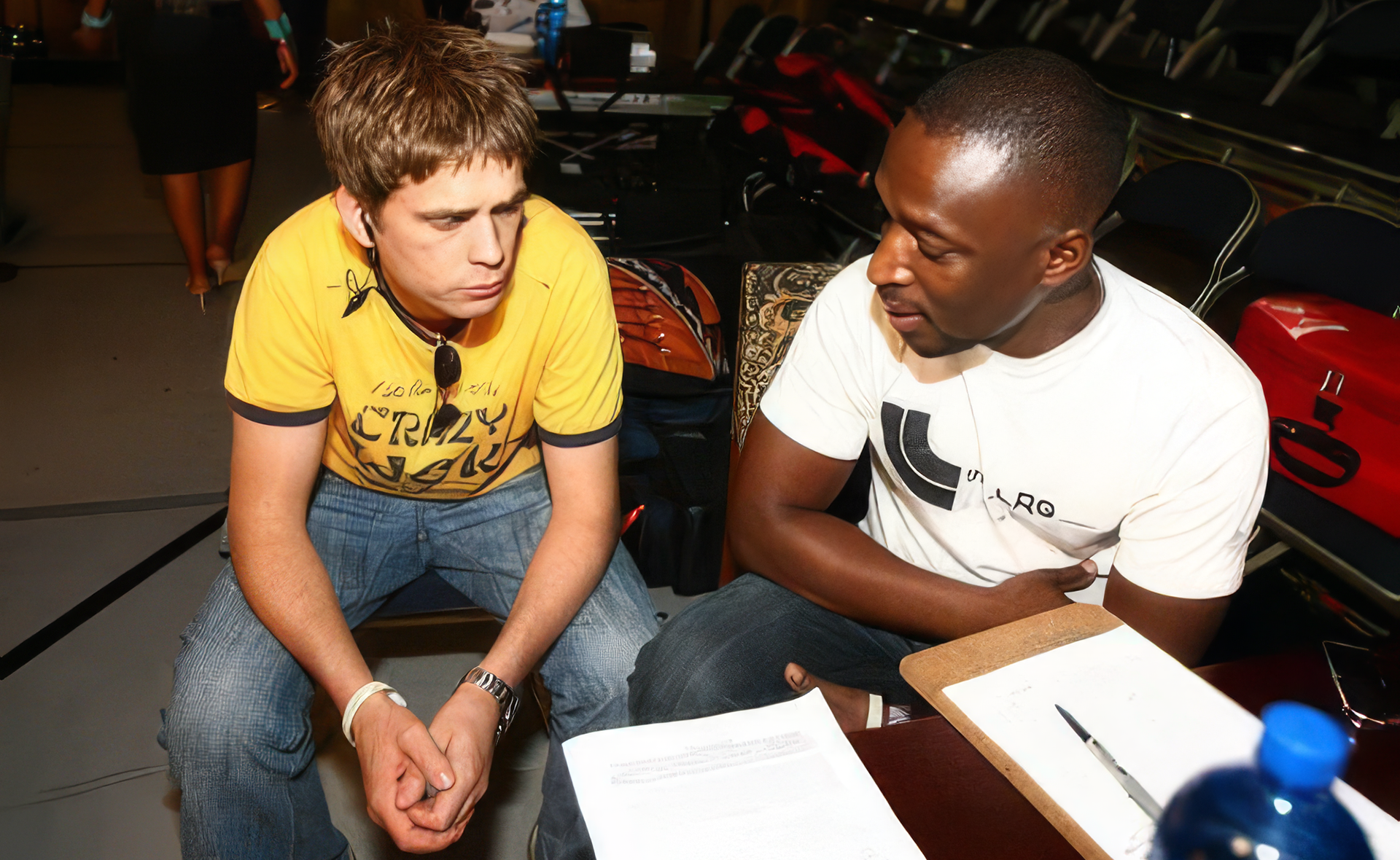
Every market had its own cultural temperature. Johannesburg did not move like Durban. Cape Town had a different sensibility again. Nairobi brought its own humour, music and urban confidence; Kampala had its own energy; Dar es Salaam its own rhythm and identity; Lagos was a world almost unto itself. The campaign needed enough visual consistency to feel like one MTV platform while remaining flexible enough to allow those differences to breathe.
The most important thing, however, was that the opportunity had to feel real. If you were a young person who had grown up watching MTV, perhaps never imagining there was a route onto the other side of the screen, the VJ Search needed to say very clearly: walk through this door and show us who you are.
That promise shaped everything we did.
The auditions were open to the public because we did not want the process restricted to people who already had agents, television credits or relationships inside the entertainment industry.
The entire value of the format came from the possibility that somebody extraordinary might be standing in a queue who had never previously been given an opportunity.And very often, that was exactly what happened.
The audition itself became part of the entertainment: the queues, the nerves, the extraordinary personalities and those rare moments when someone walked into the room and you knew there was something there.
Finding an MTV VJ required more than asking contestants to read lines into a camera. We wanted to see what happened when the script disappeared. Could someone interview an artist without becoming overwhelmed by the celebrity standing in front of them? Could they think on their feet? Could they handle a live audience? Did they actually understand music? Could they speak naturally about youth culture? Could they recover when something went wrong? Could they create a moment rather than merely complete an assignment?
Those questions shaped the format. The campaigns combined open public auditions with live events, music and youth-culture tests, camera challenges, improvisation, artist interviews, judging panels, audience participation, SMS voting and television coverage. Contestants were gradually placed into environments that revealed more of who they actually were. What emerged very quickly was that the search itself became a story.
There were queues stretching through audition venues, people arriving with extraordinary confidence, others paralysed by nerves, some genuinely brilliant, some completely unprepared and many simply enjoying the chance to step into an MTV environment for the day.
There were disappointments and second chances, friendships between contestants, fierce competition and those unforgettable moments when someone walked into the room and everybody suddenly became more attentive.
That was the magic of the format. Audiences did not simply receive a finished presenter at the end of the process. They watched that person emerge.
They had seen the beginning, and that made the eventual relationship between the VJ and the audience much more powerful.
When MTV Base launched across sub-Saharan Africa on 22 February 2005, it represented far more than the arrival of another music channel. It was MTV Networks’ 100th television channel worldwide and its first dedicated pan-African music service, but the real opportunity was cultural.
Africa was already producing extraordinary music and creativity. The challenge was not whether the talent existed. It was whether the infrastructure, platforms and international visibility existed at sufficient scale to connect those artists and audiences to one another and eventually to the rest of the world.
MTV Base could become one of those platforms. But there was a fundamental question at the centre of that ambition: who would tell the story?
It was not enough to put African music into the playlist. If the channel was going to grow into something genuinely connected to the continent, Africans increasingly needed to become the people presenting, interviewing, interpreting and contextualising that music.
The first presenter combination of Trevor Nelson, China Moses and Shashi Naidoo had created an important bridge into the market. The VJ Search would take the next step by going directly into African cities and searching among the audience itself.
We were effectively saying: somewhere among the people watching MTV is somebody who should be presenting MTV.
All we had to do was find them.
Talent discovery is not about recognising the finished person. It is about seeing the possibility of who someone might become before the rest of the world can see it.
The first major test of that belief came in South Africa in 2005, when we launched the first formal MTV Base VJ Search connected to MTV Base World Chart Express.
We took the campaign through Johannesburg, Durban and Cape Town, creating public auditions in each city and inviting young South Africans to show us why they belonged on MTV.
As Head of Events, Marketing and Digital Media, I headed up the campaign production and served as the creative director and producer, bringing together the public auditions, event environments, television production, marketing campaign and audience participation. The identity I had created for the VJ Search moved from the graphic world into the physical spaces themselves, the signage, stages, audition environments and campaign materials all becoming part of the same MTV experience.
Thousands of young people entered the process.
Among them was Sizwe Dhlomo, a young computer-programming student from Durban with a remarkable knowledge of hip-hop.
What I remember about Sizwe’s journey is that it almost ended before it began. He initially auditioned in Durban and did not progress as far as he wanted. For most people, that would probably have been the end of the story. They would have gone home disappointed and told their friends they had auditioned for MTV.
Sizwe travelled to Johannesburg and tried again. That decision already revealed part of his personality. There was determination there, but not desperation. He had simply decided he was not finished.
When we really began to pay attention to him, the most interesting thing was not that he could present. It was that there was substance behind what he was saying. Sizwe understood hip-hop deeply. He was intelligent, opinionated, curious and comfortable enough in his own knowledge to engage rather than simply agree. He could talk to an artist without becoming intimidated and could communicate with an audience without appearing to perform for approval.
I had the privilege of being part of the team that co-discovered Sizwe, and what we were recognising was not a finished broadcaster. We were recognising potential.
That is one of the most exciting parts of talent discovery. You are rarely looking at the final version of someone. You are trying to see what might happen if the person standing in front of you is given the platform, experience and space to develop.
Sizwe ultimately competed against Ash-Leigh La-Foy and Sfiso Magagula, with the final outcome combining audience participation through SMS voting and the judgement of the industry panel. He won and became the presenter of the first season of MTV Base World Chart Express.
His career quickly expanded beyond the original programme into artist interviews, entertainment reporting, red carpets, major MTV events and international awards coverage. What had started with a young computer-programming student walking into an open audition had become something much bigger.
And for us, the lesson was equally important. The format worked.
I remember when the three finalises, who made it through all the other screenings and auditions, was standing on stage in Cape Town, and I posed the final judges question to them: "What makes you MTV?". Fix answered by doing a stage-dive into the crowd. Well, that sealed it. We found our MTV VJ!
The South African search expanded the idea further in 2006, when the campaign was developed with Fanta and e.tv, connected to MTV Base World Chart Express with Fanta, and took the search through Cape Town, Port Elizabeth, Johannesburg and Durban.
I headed up the production as MTV Networks Africa’s Head of Events, Marketing and Digital Media, serving as creative director and producer, with the VJ Search identity and creative system carried through the television, event, marketing and digital environments.
By then, we had learned something important from the first campaign. Talent often reveals itself most clearly when people stop trying so hard to impress you. That was one of the things that stood out about Fikile “Fix” Moeti.
Fix was studying film and media at the University of Cape Town when she auditioned. From the beginning, she had an ease about her that was difficult to manufacture. She did not appear to be trying to become somebody’s idea of an MTV presenter. She communicated naturally, listened to what was happening around her and responded quickly.
She had warmth, intelligence and an instinct for the camera, but the screen presence never overwhelmed the person underneath it.
I discovered Fix through that campaign and watched her move through the competition alongside Kyle White, Xylon van Eyck and Sandy Mzolo. The process tested their music knowledge, spontaneity, presentation ability and capacity to connect with audiences, but Fix continued to hold onto the quality that had made her stand out in the first place: she felt real.
She won the competition and became the presenter of MTV Base World Chart Express, becoming the first female VJ discovered through the MTV Base search platform.
Her career would eventually move far beyond the original programme into television, radio and DJ culture, providing another indication that the VJ Search was not simply finding temporary presenters for an MTV format. It was discovering personalities capable of building much larger careers. That was when the project began to feel like something more permanent. We were building a talent pipeline.
The pan-African idea became strongest when we stopped trying to make Africa sound like one voice and instead created a platform powerful enough for many different African voices to stand together.

In Kenya, we discovered Emukule “Kule” Ekirapa, who brought a natural confidence and understanding of Nairobi’s growing music and youth culture into the campaign.
I was part of the team that co-discovered Kule, and what became clear was his adaptability. He could move between environments easily.
He was comfortable with artists, audiences and cameras, and that versatility made him particularly suited to MTV, where the job of a VJ rarely remained inside a studio for very long.
One day you might be carrying a television link; the next you could be backstage at a concert, interviewing an artist or presenting in front of a large live audience.
The role demanded cultural awareness and technical ability, but it also demanded confidence under circumstances that were often unpredictable.
Kule possessed that quality.
His emergence gave Kenyan audiences someone who understood their creative world because he belonged to it, while also giving MTV a personality capable of operating confidently across the wider continent.

The Ugandan search produced one of the stories I particularly loved because it captured the democratic nature of the entire idea. Carol Mugasha was working as an information-technology intern when she entered the VJ Search. There was nothing about her professional background that suggested an obvious route into MTV, and that was exactly why the platform mattered.
Traditional television systems often required people to have already accumulated experience before they were given meaningful access. The VJ Search reversed that logic. We were interested in the person first. Experience could come afterwards.
I was part of the team that co-discovered Carol, and through the competition she emerged as the new Ugandan MTV VJ. Her appointment meant that a young woman working in information technology could walk into an open public audition and eventually become the television face of one of the world’s most recognisable youth-culture brands in her country.
At a time when Kampala’s contemporary music scene was becoming increasingly dynamic, drawing from hip-hop, dancehall, R&B, Afro-pop and distinctly Ugandan sounds, Carol gave MTV an authentic connection into that culture. She was not observing Kampala from outside. She belonged to it.
In Tanzania, I worked closely with respected music and entertainment executive Christine 'Seven' Mosha, the most influential music entertainment executive in East Africa today. Together, we co-discovered Vanessa Mdee through the Dar es Salaam search. (lol well Seven and I still dispute until today who actually did, but will hand it to Seven and will share co-credit).
The Tanzanian search became particularly memorable because of my collaboration with Christine 'Seven' Mosha, one of the people who deeply understood the changing music and entertainment landscape in Tanzania.
Seven knew the artists, the industry, the personalities and the cultural nuances of the market, and that local knowledge was invaluable. A format like the VJ Search could never succeed simply by arriving with international production standards. It had to understand the people it was speaking to.
Together, we co-discovered Vee in Dar es Salaam.
There was something immediately compelling about Vanessa. She possessed confidence and intelligence, but what struck me most was the ease with which she seemed able to move between worlds. She could be unmistakably Tanzanian while also communicating naturally across cultures. She never seemed to believe that becoming international required diluting where she came from.
That quality would ultimately become one of her greatest strengths.
Vanessa became MTV Base’s first Tanzanian VJ and joined Kule and Carol within the East African Coca-Cola-supported chart platform. Her work with MTV soon travelled well beyond Tanzania as she presented programmes and events across different parts of the continent.
Years later, her career would expand across television, radio, music and advocacy, but the beginning was there in that Dar es Salaam VJ Search.
Those are the moments that remain remarkable when you look back. At the time, you are standing inside a production environment making decisions about contestants. You are thinking about the next audition, the next camera setup, the next event and the next broadcast. You do not necessarily know what the person standing in front of you will become.
Sometimes you get to find out.
The strongest presenters never had to become less Kenyan, less Ugandan, less Tanzanian, less Nigerian or less South African in order to become more international. Their identity was precisely what made them powerful.
Nigeria presented another entirely different kind of energy. By 2007, there was already tremendous momentum building around Nigerian entertainment. Lagos was loud, ambitious, competitive and creatively relentless. Music was developing at extraordinary speed, and the confidence of the industry was impossible to ignore.
The world would later come to understand just how influential Nigerian popular music could become internationally, but even then you could feel that something important was happening.
MTV needed someone who could represent that world from within it. The Nigerian VJ Search drew thousands of young people, and from that process emerged Cynthia 'C-Von' Okpala.
I was part of the team that co-discovered Cynthia, and she had the combination of confidence, personality and cultural awareness the market required. Lagos could overwhelm someone who was attempting to perform a television persona. C-Von had enough natural presence to move inside that environment rather than being swallowed by it.
She became MTV Base’s first Nigerian VJ, giving the channel a locally grounded presenter at precisely the moment when Nigeria was becoming increasingly central to Africa’s contemporary music story.
Her career later moved through television, radio, live entertainment and acting, becoming another example of how much further the impact of these searches travelled beyond the original show and campaign.
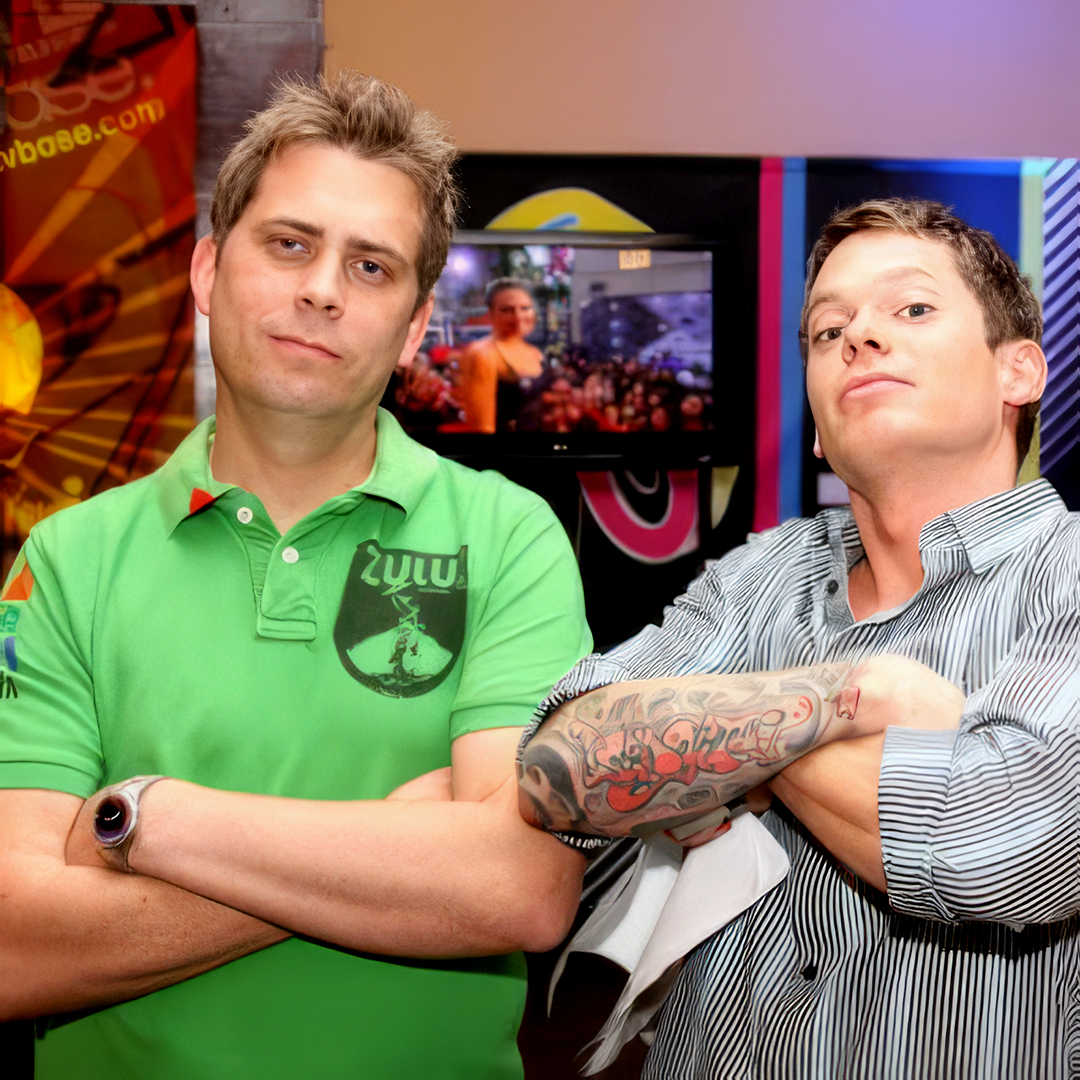
Looking back, what I find especially interesting about the VJ Search is how completely the different areas of MTV came together around one idea.
As Head of Events, Marketing and Digital Media, I was able to approach the campaign from several directions at once. I headed up the campaign production, served as producer and creative director, shaped the live environment, worked across the marketing and digital strategy and built the creative identity that connected all of those components.
I created and designed the MTV VJ Search logo and complete brand identity, but the identity was never intended to exist only as a graphic mark. It had to become an entire visual system. It needed to work on television and in advertising, on a stage and at an audition venue, through printed promotional material and across digital platforms. It needed to survive being transported between countries while still feeling alive in every new environment.
That integration was important because MTV itself was never simply television.
The most effective MTV ideas tended to move easily between screens, music, artists, live audiences, events, marketing and culture. The VJ Search worked in much the same way.
The television show gave the campaign scale. The live auditions gave it human energy. Marketing brought people through the doors. Digital media extended the conversation. Brand partners such as Fanta and Coca-Cola helped amplify the opportunity. Audience voting made viewers participants rather than passive spectators. The event environments gave contestants their first physical encounter with the MTV world, and the eventual winner stepped directly from that world into real presenting responsibilities. Everything reinforced everything else. At the centre of it all was a very simple promise: somewhere out there was someone who belonged on MTV, even if they did not know it yet.
MTV Base became truly African not simply when African music appeared on the screen, but when Africans themselves increasingly became the personalities presenting, interpreting and defining what that screen represented.
One of the most important things about the VJ Search was the way it challenged the traditional routes into television.
Broadcasting had often been a relatively closed world. You needed the right experience, the right connections, the right representation or an existing relationship with the right people. The VJ Search changed the entry point.
You could be studying computer programming, studying film, working in information technology, or simply be the person among your friends who knew more about music than everyone else and had never considered that this might actually become a career. You could arrive at an open audition and be seen.
That idea had enormous power.
It also gave us something important in return. Every city taught us more about the audience. When thousands of people arrived for auditions, they brought the culture with them. They brought new slang, new music, fashion, humour, confidence, frustrations and ambitions. Even the people who never made it through the first round told us something about who was watching MTV and what mattered to them.
The search became a form of listening.
We were looking for presenters, but at the same time MTV was learning more about Africa.
We were searching for presenters, but the thousands of young people who came through those auditions were doing something equally important: they were teaching MTV about the Africa they wanted to see reflected back at them.
Underlying all of this was a belief that increasingly shaped much of the work we were doing at MTV Base: Africa needed to be able to represent itself.
It sounds obvious now, but at the time it had profound consequences for how we approached programming, artists, talent and storytelling.
African music could not permanently be interpreted through an external lens. African artists needed platforms where they could speak for themselves. Audiences needed to see their own cities, accents and personalities reflected on screen without those things being treated as exotic or secondary.
The VJs became part of that shift.
When Sizwe spoke about hip-hop, he spoke from knowledge rather than a script. When Kule talked about Nairobi, there was lived experience behind it. Carol carried Kampala with her. Vanessa never needed to stop being Tanzanian in order to operate internationally. C-Von understood the energy of Lagos because it was part of her cultural environment. Fix connected with audiences because she was not trying to imitate somebody else’s idea of television.
They were not simply hosts.
They became interpreters of the cultural worlds around them.
That distinction mattered enormously.
The stages eventually came down, the campaign graphics disappeared and the television seasons ended. The people we discovered carried on—and ultimately, their careers became the most enduring part of the campaign’s legacy.
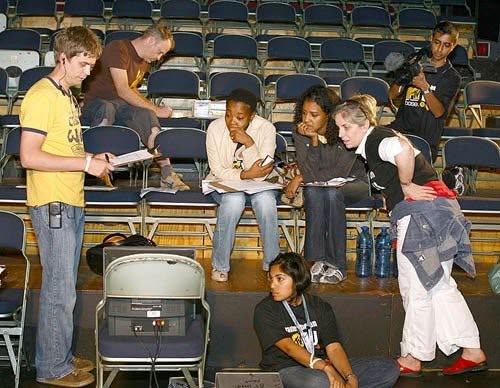
For me, the MTV VJ Search Africa remains deeply connected to what I loved about working at MTV during those years.
My role as MTV Networks Africa’s Head of Events, Marketing and Digital Media gave me the opportunity to work across disciplines that are often separated inside large organisations. On the VJ Search I could head up the campaign production, work as producer and creative director, build the event and television experience, shape the marketing and digital campaign and create the visual identity through which audiences encountered the entire project. I designed the logo and brand identity, and I created and developed the campaign’s creative items across all of its different platforms. But as important as those things were to me creatively, they are not what I remember most vividly today.
I remember the people.
I remember recognising something in Sizwe Dhlomo before the career existed. I remember discovering Fix Moeti and seeing that natural intelligence and screen confidence appear before it had been shaped by years in broadcasting.
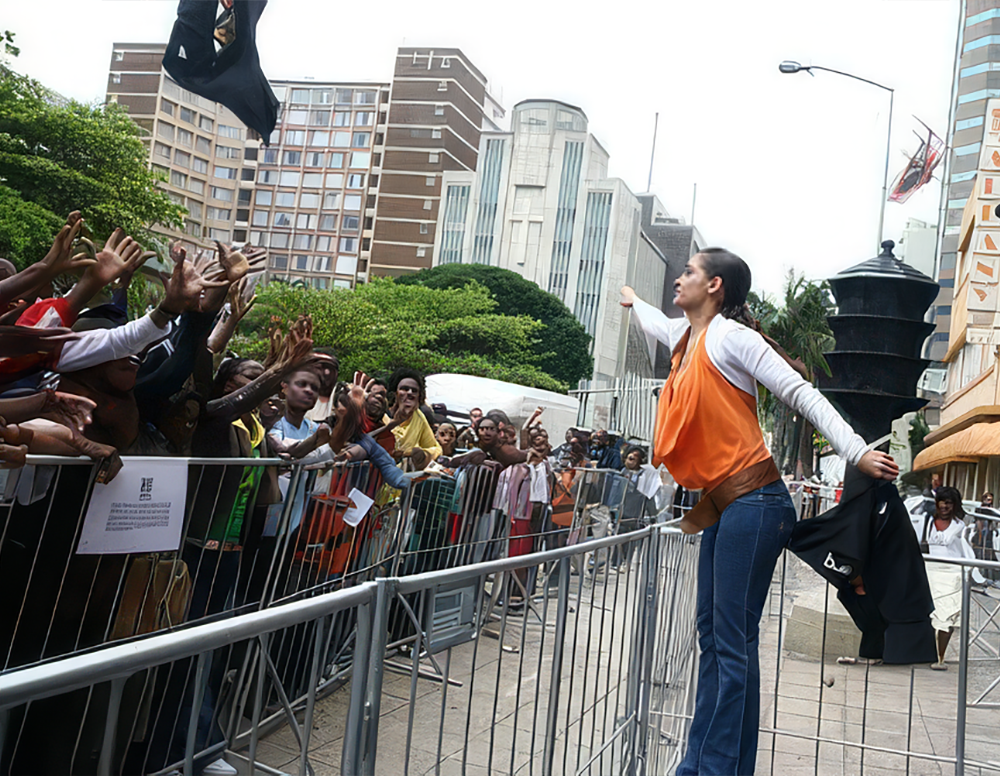
I remember working with Christine 'Seven' Mosha in Tanzania and co-discovering Vanessa Mdee. I remember being part of the MTV teams that discovered Kule Ekirapa, Carol Mugasha and Cynthia 'C-Von' Okpala.
Talent discovery is strange because you are meeting people before history has told you whether you were right. There are no established careers to look back on. No biographies explaining why the person matters. No awards, large audiences or years of broadcasting experience providing reassurance.
There is simply a person standing in front of you and an instinct that there is something there.
Sometimes that instinct changes a life.
Years later, when you see those people having built significant careers of their own, the meaning of those early moments changes. The audition venue is long gone. The staging has been dismantled. The television graphics are archived somewhere. The posters have disappeared from the streets.
But the people continue.
That is the part of the legacy that lives.
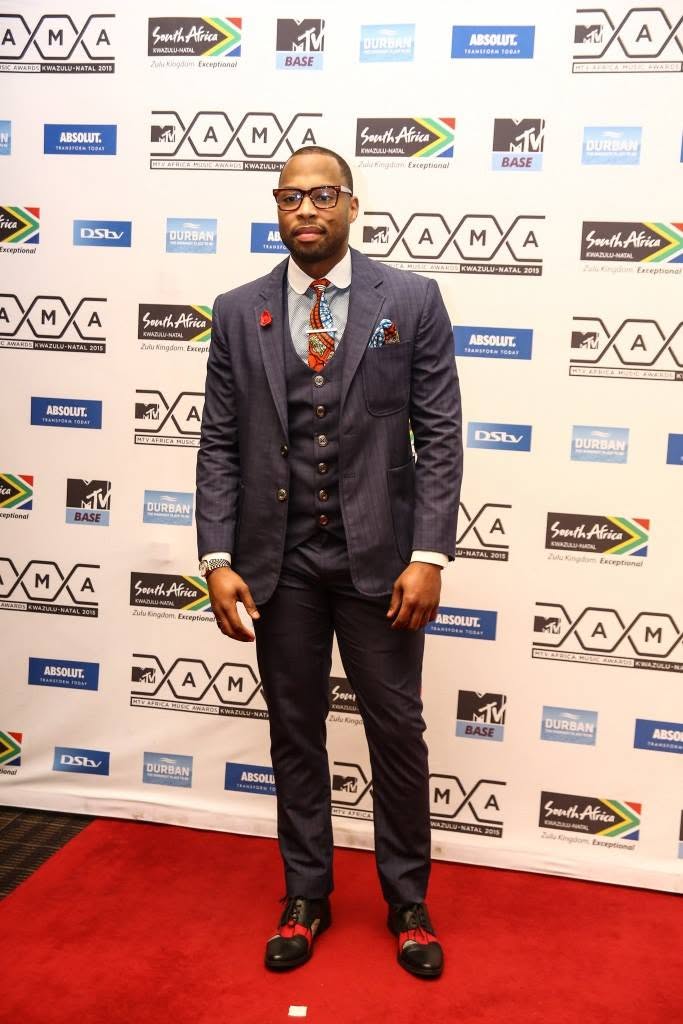
The historical importance of MTV VJ Search Africa lies not simply in the presenters it discovered, but in what the project represented during the early evolution of MTV Base. MTV arrived in Africa with the cultural power, history and global recognition of one of the most influential entertainment brands in the world. But brands do not become part of a culture simply because they broadcast into it. They become meaningful when audiences begin to recognise themselves inside them.
The VJ Search helped make that happen.
Trevor Nelson, China Moses and Shashi Naidoo had helped establish an early bridge between MTV’s international presenter culture and its new African platform.
The searches then began creating something much more permanent: a generation of African personalities who could become the faces, voices and interpreters of MTV themselves. The campaign brought together talent discovery, television production, live events, marketing, digital media, audience participation, brand partnerships, creative direction and design inside a single idea, but what made it culturally important was remarkably simple.
We opened the doors.
A young person could see an advertisement, arrive at an audition and step into the MTV world. That audition could become television. The television show could become a national conversation. The contestant could become an MTV VJ, and that VJ could ultimately build a career extending far beyond the platform that had first discovered them.
In that sense, the VJ Search became part of a much bigger transformation taking place across MTV Base and across African popular culture itself. Africa was no longer content simply to be represented. A new generation was becoming increasingly confident about representing itself.
The people we discovered embodied that change.
MTV VJ Search Africa was never simply about finding people to introduce music videos. It was about opening MTV to a generation of young Africans and discovering, among them, the personalities through whom the continent could increasingly speak in its own voice, confidently, creatively and on its own terms.
MTV VJ SEARCH AFRICA
My MTV Story Written and Recollected by
Jandré Louw
First person documented recollections and experiences as a member of the founding MTV team in Africa and as MTV Head of Events, Marketing and Digital Media at the time, Producer and Creative Director during the formative launch years of MTV in Africa.
Jandré Louw
Head of Events, Marketing and Digital Media
MTV Networks Africa
Creative Director
Producer
Campaign Production Lead
Creator & Designer: MTV VJ Search Logo and Brand Identity Creative Lead: Campaign Creative Across Television, Live Events, Marketing, Promotional and Digital Platforms
Gordon Hagan
Christine 'Seven' Mosha
Talent and Artist Management
MTV Networks Africa
Trevor Nelson
MTV VJ United Kingdom, and Broadcaster
China Moses
MTV France VJ
Early MTV VJ / MTV Base World Chart Express
Shashi Naidoo
Early MTV VJ, South Africa
Alex Okosi
Vice President, MTV Networks Africa
Executive Leadership
Dudu Qubu
Head of Production, MTV Networks Africa
CAMPAIGN & BROADCAST PARTNERS
Fanta
Partner and Sponsor
South Africa
Coca-ColaPartner and Sponsor in East Africa
Kenya, Tanzania, Uganda
ETV
Terrestrial Broadcast Partner in South Africa
Sizwe Dhlomo
MTV Africa VJ — South Africa
Fikile 'Fix' Moeti
MTV Africa VJ — South Africa
Emukule 'Kule' Ekirapa
MTV Africa VJ — Kenya
Carol Mugasha
MTV Africa VJ — Uganda
Vanessa 'Vee' Mdee
MTV Africa VJ — Tanzania
Cynthia 'C-Von' Okpala
MTV Africa VJ — Nigeria
Photography Note: All photographs reproduced in this publication originate from original images taken at the time of the events depicted. Some source files are small or of very limited or low resolution because they were captured many years ago using early-generation Nokia, Motorola and BlackBerry mobile handsets, whose cameras had significantly lower image-quality and resolution capabilities than those available today. Where necessary, selected photographs have been enlarged, upscaled, depixelated and resolution-enhanced to improve clarity and presentation. AI-assisted tools were used solely for these technical restoration and display purposes. No people, objects, settings or material visual content were added, removed or generatively altered; the photographs remain faithful to the original moments as they were captured as the actual photographs.