


Water for Life was about what happens when one of the world’s biggest voices stops, listens, and helps the world see something as fundamental as water through the life of a single child.
There are moments in a career when music stops being simply entertainment and becomes something larger: a platform through which the world can be made to look at an issue it might otherwise pass by. JAY-Z: Water for Life was one of those moments.
In 2006, three very different forces came together around one of the most fundamental challenges facing humanity. There was Jay-Z, already one of the defining figures in global hip-hop; MTV, with an extraordinary ability to reach young audiences across borders and continents; and the United Nations, then in the early years of its International Decade for Action, “Water for Life, 2005–2015.” What emerged from that combination was far more than a celebrity endorsement or a conventional awareness campaign. It became a journey across the world in which live music, television, documentary storytelling, philanthropy and the everyday realities of communities were connected by one deceptively simple idea: access to clean water should never be a privilege.
The partnership was formally announced at United Nations Headquarters in New York on 9 August 2006, bringing together UN Secretary-General Kofi Annan, Jay-Z and MTV President Christina Norman around an initiative intended to use MTV’s global reach and Jay-Z’s enormous cultural influence to focus the attention of young people on the worldwide crisis surrounding clean water and sanitation.
At the time, more than a billion people were estimated to be living without reliable access to safe drinking water, while approximately 2.6 billion lacked adequate sanitation.
Those numbers were staggering, but statistics alone have a way of becoming distant. You can hear that more than a billion people lack something and still struggle to imagine what the absence of that thing actually means to one person, one family or one child. The power of Water for Life was that we could take those enormous numbers and make them human. Instead of talking only about a global crisis, we could show the road someone walked every morning to reach water, the weight of the container they carried home, the condition of the water when they eventually found it, and the effect that journey had on whether a child could reach school on time.
Africa would become central to that story.
Jay-Z was preparing for an ambitious seven-week international tour taking him through Europe, Africa and Asia before eventually reaching Australia. It would already have been an extraordinary undertaking simply as a global music tour, but Water for Life gave the journey another purpose.
Instead of flying into a city, performing at night and leaving the following morning, there was an opportunity to look beyond the airports, hotels, press conferences and concert stages and into communities where the absence of something most of us took completely for granted was shaping almost every part of everyday life.
MTV’s cameras travelled with him, documenting those encounters as they happened. The journey would eventually become The Diary of Jay-Z: Water for Life, but at the time we were living inside the story rather than looking back at it as a finished piece of television.
Jay-Z’s own story had always been about survival and possibility. Water for Life placed that story alongside communities where even the most basic starting point — clean water — could never be taken for granted.
There was something particularly powerful about Jay-Z being the person at the centre of this journey because his own story had always been about circumstances, ambition and the possibility of moving beyond the world into which you were born.
Long before the arenas, private aircraft, international business ventures and executive boardrooms, Shawn Carter had grown up in Brooklyn’s Marcy Houses. Hip-hop became both his language and his way forward. When the traditional record industry initially failed to provide him with the opportunity he wanted, he helped build Roc-A-Fella Records and released Reasonable Doubt in 1996, beginning one of the most consequential careers the culture had produced. Through albums such as Vol. 2... Hard Knock Life, The Blueprint and The Black Album, he travelled from being a formidable New York rapper to becoming one of the defining cultural figures of his generation. By 2006, that story had moved far beyond recording studios. Jay-Z had become an entrepreneur, businessman and executive leader, and was serving as President and CEO of Def Jam Recordings while remaining one of the most influential artists in popular culture.
He had publicly stepped away from recording after The Black Album in 2003, but 2006 was also becoming the year of his return with Kingdom Come.
Water for Life therefore arrived at an extraordinary moment in his life. Here was an artist whose music had so often been about survival, adversity and transformation now travelling through communities where those ideas took on a completely different physical meaning.
For Jay-Z, the familiar language of having come from difficult circumstances suddenly encountered realities in which children were losing hours of their day simply trying to find water, schools were functioning without adequate sanitation and entire communities depended upon water sources shared with animals.
That did not diminish his own story; instead, it widened the frame around it. It was part of what gave the campaign an emotional honesty that would have been almost impossible to manufacture through conventional advertising.
The African concert journey began in Dar es Salaam, Tanzania, on 4 October 2006, where Jay-Z performed at the Diamond Jubilee Hall. Even without the wider Water for Life story, the show represented something important. One of the most influential artists in global hip-hop was performing in East Africa at a time when Africa was still too frequently viewed by the international touring business as peripheral, despite the extraordinary audiences that already existed across the continent.
At MTV Africa, I was overseeing the campaign in my role as Head of Events, Marketing and Digital Media, and the project touched almost every part of what that role meant. There was never a neat boundary between the tour, the humanitarian campaign, the documentary, the marketing operation and the television production. They all had to move together. A tour at this level was already an enormous machine. Artists, management teams, travel, security, staging, technical production, venues, promoters, broadcasters, publicity, hotels, ground transport and countless other moving parts had to align from country to country.
We were now adding another layer: meaningful community engagement and humanitarian storytelling that could never feel like an afterthought attached to a concert itinerary. For that to work in Africa, strong local relationships were essential.
In Tanzania, I worked with Joseph Kusaga, one of East Africa’s leading promoters and media entrepreneurs, to put the local concert relationship together and establish the framework around Jay-Z’s visit. Joseph was one of the important people shaping Tanzania’s modern media and entertainment landscape, and working with people like him was fundamental to how I believed MTV should operate across the continent.
Africa was never a blank entertainment landscape waiting for international artists to arrive. There were already exceptional promoters, broadcasters, entrepreneurs, artists, radio stations, television networks and audiences everywhere. The opportunity was to build meaningful bridges between that existing African ecosystem and the international entertainment world.
While in Dar es Salaam, the story moved away from the concert and into Mwananyamala, in the Kinondoni area of the city, where Jay-Z was able to see community water initiatives and understand the difference even relatively straightforward infrastructure could make. One of the simplest images from the journey became one of its most memorable: Jay-Z opening a tap and watching clean water flow into containers.
There was nothing dramatic about the technology itself, which was precisely why the moment mattered. For millions of people, something as ordinary as turning a tap and seeing clean water appear could transform the structure of an entire day. Beyoncé, who travelled through parts of the African journey with him, was also present during the Tanzanian visit.
From Tanzania, the tour travelled west to Accra, where Jay-Z performed at the Accra International Conference Centre on 6 October 2006. Everywhere we went, the scale of his African following was impossible to miss. These were not audiences waiting to be introduced to Jay-Z or to American hip-hop. They knew the records, the lyrics, the Roc-A-Fella mythology and the language of the culture. Hip-hop had already travelled deeply into Africa and had been absorbed, reinterpreted and made local in cities across the continent.
The audience was already there. What the international industry was only beginning to understand was how large and culturally sophisticated that audience had become.
From Accra came Lagos, where Jay-Z became part of the enormous THISDAY Music Festival weekend of 7–8 October 2006. The festival brought together an extraordinary collection of international stars, with Jay-Z and Beyoncé appearing alongside artists including Snoop Dogg, Mary J. Blige, Missy Elliott, Busta Rhymes, Ciara and En Vogue.
There was something important happening in Lagos during those years. Nigeria was becoming increasingly impossible for the international music industry to overlook, not only because of its extraordinary population but because of the cultural confidence and creative momentum already building inside the country. Lagos was not standing outside the global music conversation hoping to be included. It was becoming one of the places where the future of that conversation would increasingly be shaped.
The Nigerian journey also moved beyond the show environment into communities where access to potable water, boreholes and basic infrastructure formed part of the wider Water for Life story. That rhythm became characteristic of the African tour.
One moment could be defined by motorcades, production schedules and thousands of people gathering for a concert; the next could be spent talking about how far a family travelled every day simply to collect water.Then we reached Angola, and the story became deeply personal.
The Luanda chapter remains one of the defining parts of the entire Water for Life journey for me.
I had brokered the Angola concert relationship with Karina Barbosa, one of the country’s leading figures across music, entertainment, fashion, hospitality and live events. Karina understood Luanda in a way no international booking office or touring company ever could. She understood its audiences, its culture, its entertainment industry and the rapidly changing energy of a country emerging from decades of conflict and beginning to define a new future.
Those relationships mattered enormously to me. Bringing a global artist into an African country should never simply be about securing a venue and putting tickets on sale. The artist needs to enter through relationships with people who understand the heartbeat of that market and who are already part of building its cultural industries. That was how we approached Jay-Z’s Angola visit, and together with Karina we established the local concert relationship that enabled Luanda to become an important part of the wider MTV and Water for Life journey. Jay-Z performed at Cine Karl Marx in Luanda on 9 October 2006, with Angolan fans turning out for an artist whose music had already travelled deeply into the country’s youth culture. Inside the venue was everything one expected from a major Jay-Z show: energy, anticipation, recognition and an audience that knew the music intimately.
Yet the story that ultimately came to define Luanda did not begin beneath the stage lights.It began with a 14-year-old schoolgirl named Bela.
Before that day, the lives of Bela and Shawn Carter could hardly have appeared further apart. Jay-Z had arrived in Luanda as one of the most successful artists in the world, travelling internationally with the enormous infrastructure that surrounds a global superstar. Bela was fourteen years old and living with six members of her family in a single-room home without its own running water. Water was not something that appeared simply by opening a tap. It was something that had to be found, paid for, carried home and carefully managed.
Her family depended on somebody nearby who was fortunate enough to have a pipe supplying water to their home. Those without their own connection had to pay for access. Bela would make that journey with a 20-litre container, filling it and carrying it back to her family. She had to do it twice a day. When full, the container weighed around forty pounds, close to twenty kilograms, and the nearest source was more than half a mile away.
This was not an occasional chore or something arranged for MTV’s cameras. It was woven into the architecture of her day. Before school came water. Before lessons and the normal freedoms of being fourteen could begin, Bela first had to help secure one of the most basic necessities for the family she lived with.
The global water crisis stopped being a statistic the moment Jay-Z walked beside Bela. Suddenly it had a name, a face, a road and a twenty-litre container that had to be carried home.
That was the point at which her story and Jay-Z’s intersected.
He did not simply stand beside her while somebody explained what she did. He walked with her and tried to carry the container himself. What appeared at first to be a straightforward gesture very quickly became something else. Forty pounds is heavy, but forty pounds of water behaves differently from a fixed weight. It moves inside the container as you walk, pulling against your balance, while the road beneath them was not a smooth pavement but rough dirt and stone.
Jay-Z managed only a short distance before needing to change hands.
Suddenly the statistic had disappeared. There was no longer a global figure describing how many people lacked access to water. There was Bela, there was the road, there was the container, and there was one of the most famous men in the world discovering physically how difficult it was to do something this fourteen-year-old girl regarded as part of an ordinary day.
The water itself still required care. Bela carried chlorine tablets that could be added to help make it safer. Seeing precious water spill down her shoulder as she carried the container affected Jay-Z visibly. Here was something he had spent most of his life regarding as virtually limitless, yet every drop had a different value when somebody had walked that far and worked that hard to obtain it.
And that was only the beginning of Bela’s day.
Around midday, she would make another journey, this time to school. Jay-Z walked that route with her too, and in doing so began to understand that the water crisis could not be separated neatly from sanitation, education, health or dignity. The road to Bela’s school passed alongside open sewage and stagnant contaminated water.
There were children playing nearby, animals moving through the same environment and food being prepared and sold only metres away. When a ball went into the polluted water, children retrieved it, wiped it off and continued playing.
The camera could record the image, but it could not capture the smell. That walk became an important turning point in Jay-Z’s own experience of the campaign because it confronted him with the difference between the language of hardship and the physical reality of it. His own music had been built partly upon memories of Marcy, poverty, survival and life in difficult neighbourhoods, but walking beside Bela complicated that understanding. The conditions he encountered in Luanda forced him to reconsider what the idea of being “at the bottom” could actually mean when even clean water, sanitation and a safe road to school could not be assumed.
Bela’s school continued that story. There was no general running water across the school grounds, and water previously had to be carried in buckets even to make basic sanitation possible. On the day of the visit, however, there was also a small sign of what change could look like. Through a UNICEF-supported grant, the school had received a new functioning bathroom with running water.
It would have been easy to regard one bathroom as insignificant against a problem involving more than a billion people, but standing there made the opposite seem true. One functioning toilet could mean fewer opportunities for disease to spread. It could mean better hygiene, improved attendance and greater dignity for children, particularly girls as they grew older. That was one of the lessons threaded throughout Water for Life: the scale of the crisis was enormous, but many of the interventions capable of changing individual lives could be remarkably basic. A tap, a toilet, a pipe or a pump could alter the rhythm of an entire day.
Bela showed us that water was never only about thirst. It was about childhood, school, health, time, dignity and the possibilities available at the beginning of every day.
Of all the people Jay-Z could have encountered on an international tour, it was this fourteen-year-old girl in Luanda whose ordinary routine became one of the emotional foundations of the entire story.
She was not performing for an audience and she was not part of the entertainment business surrounding him. She was simply living her life, doing something millions of girls around the world were doing every day because somebody in the family had to bring water home.
For a brief moment, those two completely different lives crossed.
Jay-Z walked Bela’s road. He carried her water. He followed her route to school. He saw the sewage she crossed, the conditions surrounding the school and the difference a single functioning bathroom could make. Before leaving, he told her that he admired her courage.
That intersection became, one of the purest expressions of what Water for Life had been created to do.
A global superstar could bring attention, MTV could bring cameras, and the United Nations could bring knowledge and an international framework, but ultimately the campaign needed a human story through which people could understand why any of it mattered.
Bela became that story.
She transformed a statistic into a person and a global crisis into one ordinary day in the life of a fourteen-year-old girl. Through her, millions of viewers could understand that the absence of clean water was not simply about being thirsty. It determined when you woke, where you walked, what you carried, how much time remained for school, whether sanitation was available and how vulnerable you were to disease. That was why the encounter stayed with Jay-Z, and why it became such a defining part of The Diary of Jay-Z: Water for Life. The enormous phrase “global water crisis” had suddenly acquired a face.
Her name was Bela.
From Luanda, the tour moved south into South Africa, beginning with a show at the Bellville Velodrome in Cape Town on 11 October 2006. Two days later, on 13 October, Jay-Z performed in Durban at the ABSA Stadium Outer Fields, but some of the most important moments surrounding that show happened many kilometres away from the stage.
The Water for Life journey took us into Mid Illovo, a rural community in KwaZulu-Natal, where schoolchildren showed Jay-Z how water had traditionally been collected. The route descended through steep terrain towards a source used by both people and animals. Even walking the route without carrying anything made the difficulty obvious; imagining young children having to make that journey repeatedly, carrying water back uphill, changed the way you thought about something most people simply obtained by turning a tap.
Every hour spent collecting water was an hour that could not be spent at school, studying, playing or simply being a child.
At the school, another part of the Water for Life initiative became visible through a PlayPump installed with funding connected to Jay-Z’s involvement. The concept resembled a children’s roundabout.
As children pushed it around and played, the movement powered a pumping system designed to draw groundwater into storage from which clean water could be accessed.
At that moment, the technology carried a powerful visual idea. Instead of children leaving school and walking long distances to find water, water could be brought closer to the school and the surrounding community.
One afternoon we were walking with children towards a rural water source; a few hours later Jay-Z was performing before thousands. Those two worlds existing in the same day were the essence of Water for Life.
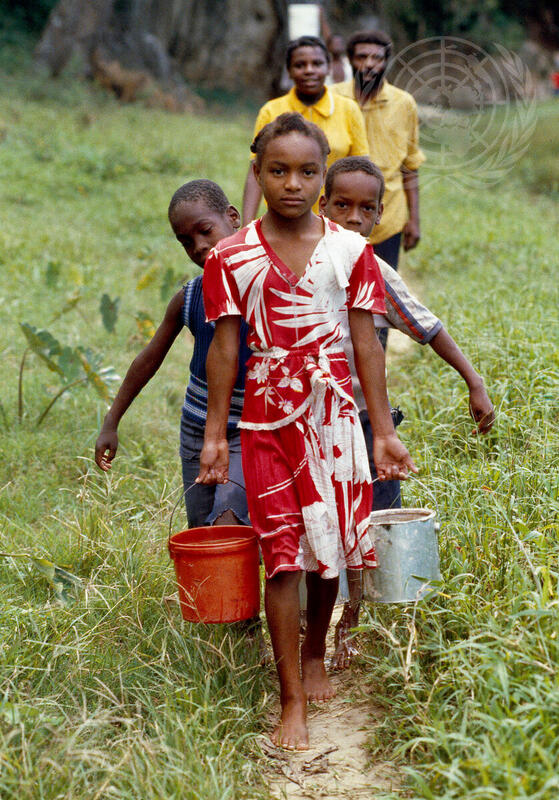
What stayed with me most was the contrast between that afternoon and the evening that followed. Earlier we had been standing with children on a hillside talking about water, school and the physical journey required simply to collect enough for everyday life. Only hours later there were enormous sound systems, stage lighting, security, production crews, thousands of fans and Jay-Z performing at full force in Durban.
Those two worlds existed within the same day, and that contrast was the essence of Water for Life. The entertainment platform created attention, but the humanitarian story gave that attention somewhere meaningful to go. A concert could bring thousands of people together and create enormous media energy; the responsibility was to use some of that energy to illuminate something that otherwise might remain invisible.
The African concert journey culminated the following night, 14 October 2006, at the Coca-Cola Dome in Johannesburg. In just eleven days, we had moved through Dar es Salaam, Accra, Lagos, Luanda, Cape Town, Durban and Johannesburg, while the wider Water for Life journey had taken Jay-Z and the MTV cameras into communities across Tanzania, Nigeria, Angola and South Africa.
Looking back at the routing now, the scale of it remains extraordinary. We crossed East Africa, West Africa, Lusophone Southern Africa and South Africa in little more than a week and a half, moving between different languages, different music cultures, different entertainment industries and vastly different social environments. From inside MTV Africa, my role was to help hold those worlds together.
The relationships I had established with Joseph Kusaga in Tanzania and Karina Barbosa in Angola were particularly meaningful because they represented something I believed strongly about from the beginning of MTV’s African journey: international artists should not simply arrive on the continent through an external production machine.
They should connect with the people already building Africa’s music and entertainment industries.
The local promoters, producers, broadcasters, media owners and creative entrepreneurs were not supporting characters in Africa’s relationship with global entertainment. They were the infrastructure through which that relationship could become sustainable.
The shows were the gateways, not the destination. They created the attention and cultural energy; the responsibility was to use that attention to tell stories that mattered far beyond the stage.
The shows brought audiences, media and enormous cultural energy, but the campaign then used that platform to move beyond the stages and into stories that mattered for different reasons. That distinction was critical. Water for Life could never become the story of an American superstar arriving in Africa and explaining the continent to the world.
Africa already had its own voices, communities, leaders, activists, organisations and stories. What Jay-Z and MTV could bring was an extraordinary amplifier. A global media platform could take something happening in Luanda, Dar es Salaam or rural KwaZulu-Natal and place it before millions of people who might otherwise never encounter that reality.
MTV’s role therefore reached far beyond the people who attended the concerts. The cameras transformed the journey into The Diary of Jay-Z: Water for Life, allowing the experience to continue travelling long after the final African stage had been dismantled. The documentary worked because it did not require audiences to understand development policy before they could connect emotionally with what they were seeing. Bela’s story had already demonstrated that more powerfully than almost anything else could.
You did not need to know the global statistics when you had watched a fourteen-year-old girl carry twenty litres of water home before starting the next part of her day.
You did not need a briefing document about global sanitation to understand what it meant when Jay-Z followed her past an open sewer on the way to school.
You did not need to study development economics to understand children walking down a steep hillside in KwaZulu-Natal towards a water source shared with livestock. You did not need to understand the complexities of education policy to appreciate what a functioning toilet or reliable source of clean water might mean inside a school.
That was the power of visual storytelling. The enormous crisis became a series of individual human experiences, and through those experiences the issue became understandable.
The audience could see the road, the container, the contaminated water, the school and the children. They could then see how dramatically the story changed when a tap, borehole, pump or functioning sanitation system became available.
The camera did what statistics could not: it allowed millions of people to walk Bela’s road, carry the weight of her water and understand the crisis through one ordinary day.
The documentary eventually brought the journey back to where the partnership had formally begun. On 16 November 2006, The Diary of Jay-Z: Water for Life premiered at United Nations Headquarters in New York.
There was something beautifully circular about that moment. Three months earlier, Jay-Z had stood at the United Nations talking about what he hoped to understand and what he hoped the campaign might communicate. Now the journey had happened. The conversations, roads, communities, shows and encounters existed on film, carrying with them the faces and experiences of people thousands of kilometres from New York.
Among those faces was Bela.A fourteen-year-old schoolgirl in Luanda had, without setting out to do so, become part of an international story involving Jay-Z, MTV and the United Nations. Her morning journey for water had crossed continents through television and had become a way for people who had never been to Angola to understand something about the human consequence of the water crisis.
The documentary premiered across MTV’s international network on 24 November 2006, allowing those African stories to travel far beyond the continent. Its educational life extended even further through MTV’s relationship with Cable in the Classroom, with the film and accompanying educational materials made available for use by teachers and librarians across thousands of schools in the United States.
That aspect of the campaign always stayed with me because it demonstrated the long life a story could have after an event had disappeared.
Working in live entertainment, you become very familiar with impermanence. For weeks or months, hundreds of people work towards a single night. The stage rises, the screens come alive, the artist walks out, thousands of people experience something together, and then almost immediately the process is reversed. The equipment is packed, the trucks leave, the venue becomes empty and the tour moves on.But film is different.A story can continue travelling long after the people who made it have gone home.
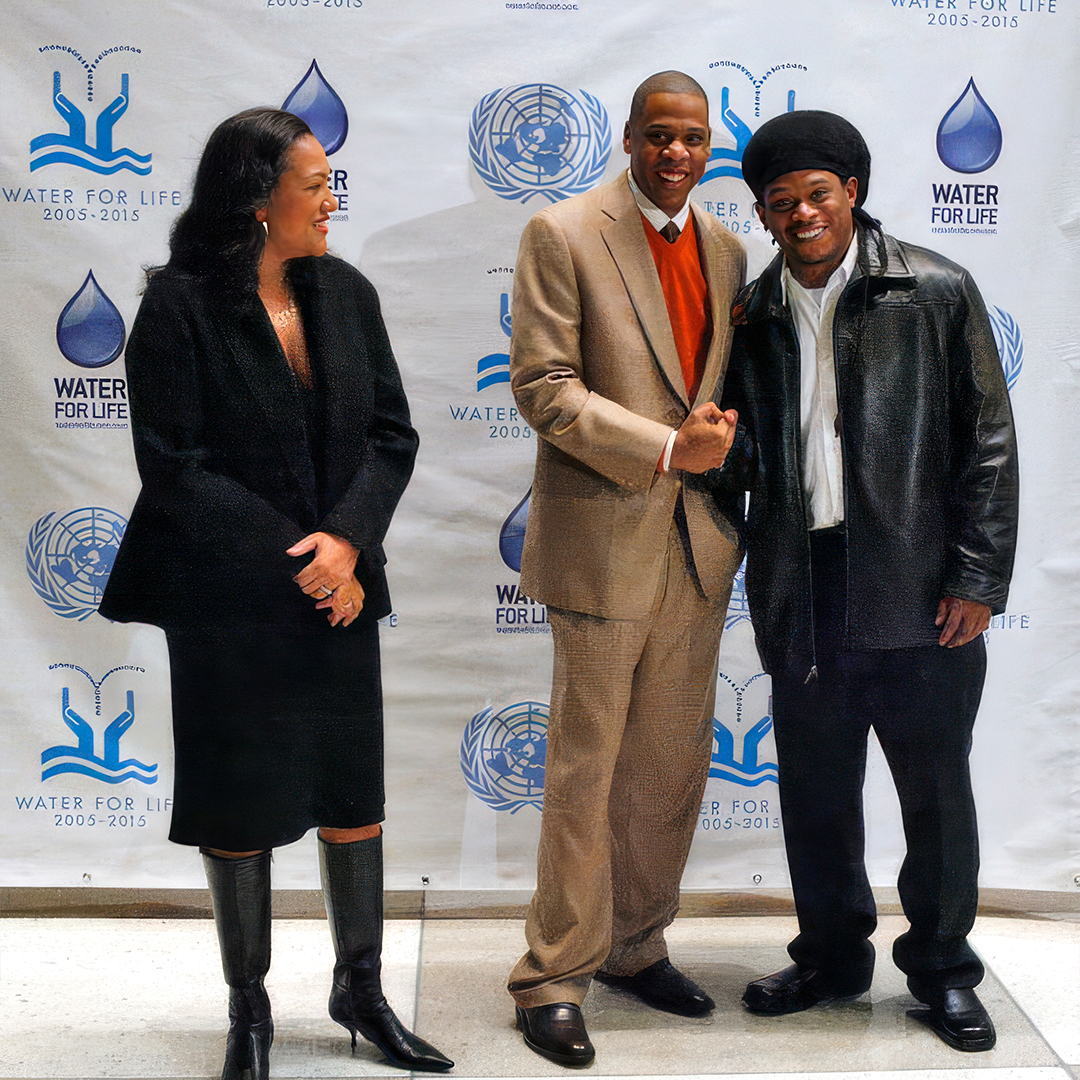
Looking back, JAY-Z: Water for Life belongs to a very particular moment in the history of MTV, hip-hop and global popular culture. Social media had not yet become the extraordinary global mobilisation engine it would later become. Television networks still possessed enormous power to put the same story in front of millions of young people across different countries almost simultaneously.
MTV had that reach. Jay-Z had an extraordinary degree of cultural authority. The United Nations brought the global issue, institutional framework and development expertise. But Africa was never simply the background against which those forces came together. It was where much of the campaign found its meaning. In Tanzania, the story could be reduced to something as simple as clean water flowing from a tap. In Luanda, it became Bela: fourteen years old, walking to collect water for the family she shared a single room with, carrying twenty litres back along an uneven road and then beginning the journey to school.
In Mid Illovo, it became the distance between a school and the water source below it, and the difference made when water could be brought closer to the children who needed it.
At the same time, the shows in Dar es Salaam, Accra, Lagos, Luanda, Cape Town, Durban and Johannesburg were telling another African story entirely.
They demonstrated just how connected African audiences already were to global popular culture and how significantly the international entertainment business had underestimated them. The demand was not waiting to be created. It already existed. The knowledge was there, the audience was there, the culture was there and the energy was extraordinary. What was changing was that the rest of the industry was beginning to understand the scale of it.
Africa was not the backdrop to Water for Life. It was where the campaign found much of its meaning, and where the global story became unmistakably human.
For me, Water for Life therefore occupies several places in memory at once. It was a humanitarian campaign and a documentary. It was also an enormous international tour, a succession of live shows and another important chapter in the changing relationship between Africa and the global entertainment business.
At its centre was an artist whose own life had begun in circumstances very far removed from the global position he occupied by 2006. A young Shawn Carter had once looked at the world from the Marcy Houses in Brooklyn and imagined a different future. Now Jay-Z possessed a platform large enough to make millions of people look towards communities they might otherwise never see. But the most powerful moment in that enormous journey may have been one of its simplest: Jay-Z walking beside Bela in Luanda.
For a short distance, the global superstar and the fourteen-year-old schoolgirl shared the same road and the same container of water. Their worlds had almost nothing in common until that moment, yet the meeting between them became a bridge through which millions of people could understand something fundamental. Jay-Z could not solve the global water crisis, and nobody involved believed that a musician, a television network or a single campaign could. What he could do was use the extraordinary cultural platform he had built to make people pay attention.
MTV could make those experiences travel, while the United Nations could connect them to a much larger international mission.
Those of us working across Africa, alongside people such as Karina Barbosa, Joseph Kusaga, our local promoters, production teams, communities and partner organisations, could help ensure that the idea became something tangible rather than remaining merely an announcement made at a press conference.
For a few extraordinary weeks in 2006, one of the biggest voices in hip-hop, one of the world’s most influential youth media organisations and the United Nations travelled along the same road. Around us were arenas and concert stages, television cameras and thousands of fans, international production teams and the enormous machinery that surrounds a global superstar.
But when I think back to Water for Life, those are not the images that carry the greatest weight.
What remains is Bela walking through Luanda with that container, and Jay-Z reaching out to take some of its weight from her. It is the children in KwaZulu-Natal making their way down a hillside towards water, and a tap in Tanzania opening as clean water begins to flow.
Years later, it is not the stages or the crowds that carry the greatest weight. It is Bela’s water container, a hillside in KwaZulu-Natal and the extraordinary meaning of clean water flowing from a simple tap.
Those were small moments inside an enormous international campaign, but they were the moments that explained everything. The campaign was called Water for Life, and in the end its meaning was exactly as fundamental as its name suggested.
Beneath all the music, the television, the stages, the celebrity and the global attention was a truth so basic that it was almost impossible to improve upon: before almost everything else in life can begin, there has to be water.
JAY-Z — WATER FOR LIFE
When Hip-Hop, MTV and the United Nations Put the Global Water Crisis on the World Stage
Jandré Louw
Head of Events, Marketing and Digital Media
MTV Networks Africa
MTV Africa Campaign Oversight
African Concert Partnership Development
Tanzania and Angola
Featuring
Jay-Z / Shawn Carter
Artist, Campaign Partner and Global Ambassador for Water for Life
With
Bela
Luanda, Angola
Whose personal story and daily journey to collect water became one of the defining human narratives of The Diary of Jay-Z: Water for Life
African Entertainment & Concert Partners
Karina Barbosa — Angola
Leading Angolan Entertainment Entrepreneur, Promoter, Music, Fashion and Hospitality Executive
Local Partner — Jay-Z Luanda Concert
Angola Concert Partnership and Local Production Facilitation
Joseph Kusaga — Tanzania
Media Entrepreneur and Entertainment Promoter
Local Partner — Jay-Z Dar es Salaam Concert
Tanzania Concert Partnership and Local Production Facilitation
Campaign Partners
MTV Networks
United Nations
United Nations Development and Humanitarian Partners
UNICEF
Jay-Z / Shawn Carter and associated management and production teams
Documentary
The Diary of Jay-Z: Water for Life
Produced as part of the MTV, Jay-Z and United Nations Water for Life initiative
MTV NETWORKS INTERNATIONAL
SENIOR EXECUTIVE LEADERSHIP
Christina Norman
President, MTV
Water for Life Campaign Launch and Global Media Leadership
Bill Roedy
President, MTV Networks International
Brent Hansen
President, MTV Networks Europe
President of Creative, MTV Networks International
Simon Guild
Chief Executive Officer, MTV Networks Europe
Alex Okosi
General Manager and Vice President
MTV Networks Africa
WATER FOR LIFE — AFRICA TOUR
Dar es Salaam, Tanzania
Diamond Jubilee Hall
4 October 2006
Accra, Ghana
Accra International Conference Centre
6 October 2006
Lagos, Nigeria
THISDAY Music Festival
7–8 October 2006
Luanda, Angola
Cine Karl Marx
9 October 2006
Cape Town, South Africa
Bellville Velodrome
11 October 2006
Durban, South Africa
ABSA Stadium Outer Fields
13 October 2006
Johannesburg, South Africa
Coca-Cola Dome
14 October 2006
Photography Note: All photographs reproduced in this publication originate from original images taken at the time of the events depicted. Some source files are small or of very limited or low resolution because they were captured many years ago using early-generation Nokia, Motorola and BlackBerry mobile handsets, whose cameras had significantly lower image-quality and resolution capabilities than those available today. Where necessary, selected photographs have been enlarged, upscaled, depixelated and resolution-enhanced to improve clarity and presentation. AI-assisted tools were used solely for these technical restoration and display purposes. No people, objects, settings or material visual content were added, removed or generatively altered; the photographs remain faithful to the original moments as they were captured as the actual photographs.